Komprise Intelligent Data Management has been validated for use with Wasabi. Follow the steps outlined below to configure Wasabi as a cloud storage target.
Note: The data restoration process is handled by your specific backup software application. As many variables can affect your unique environment, it is strongly recommended that you seek guidance from your backup software's technical support team if you encounter difficulties or have application-specific inquiries.
Log in to your Komprise account.
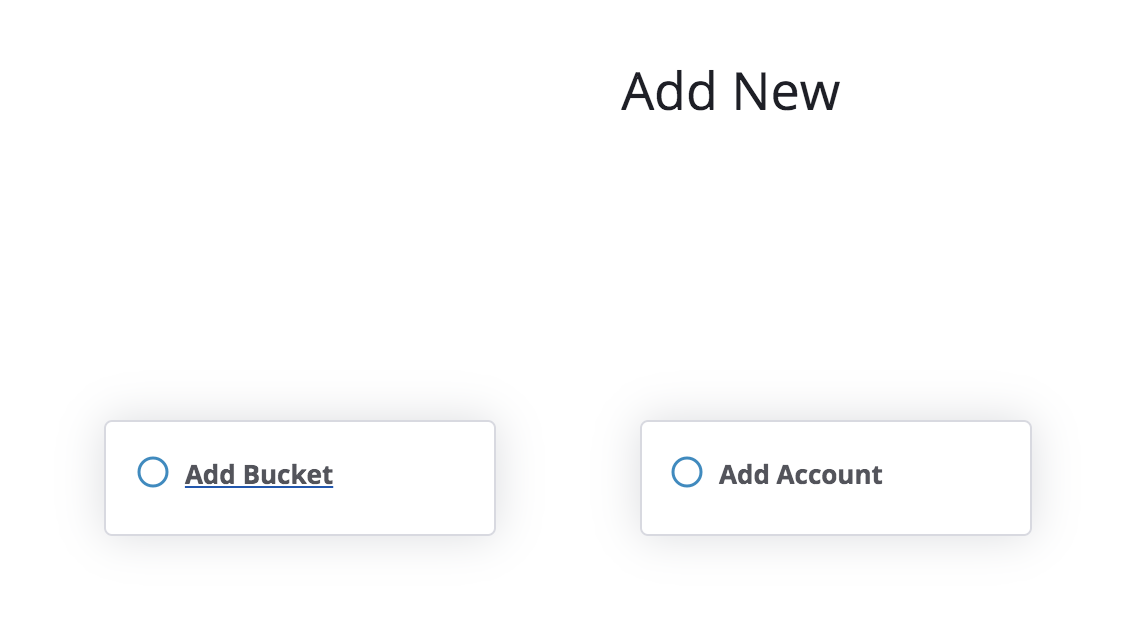
Click Data Stores, then click Add New.

If one bucket needs to be migrated via Komprise, choose Add Bucket; if multiple buckets need to be analyzed and migrated, choose Add Account.
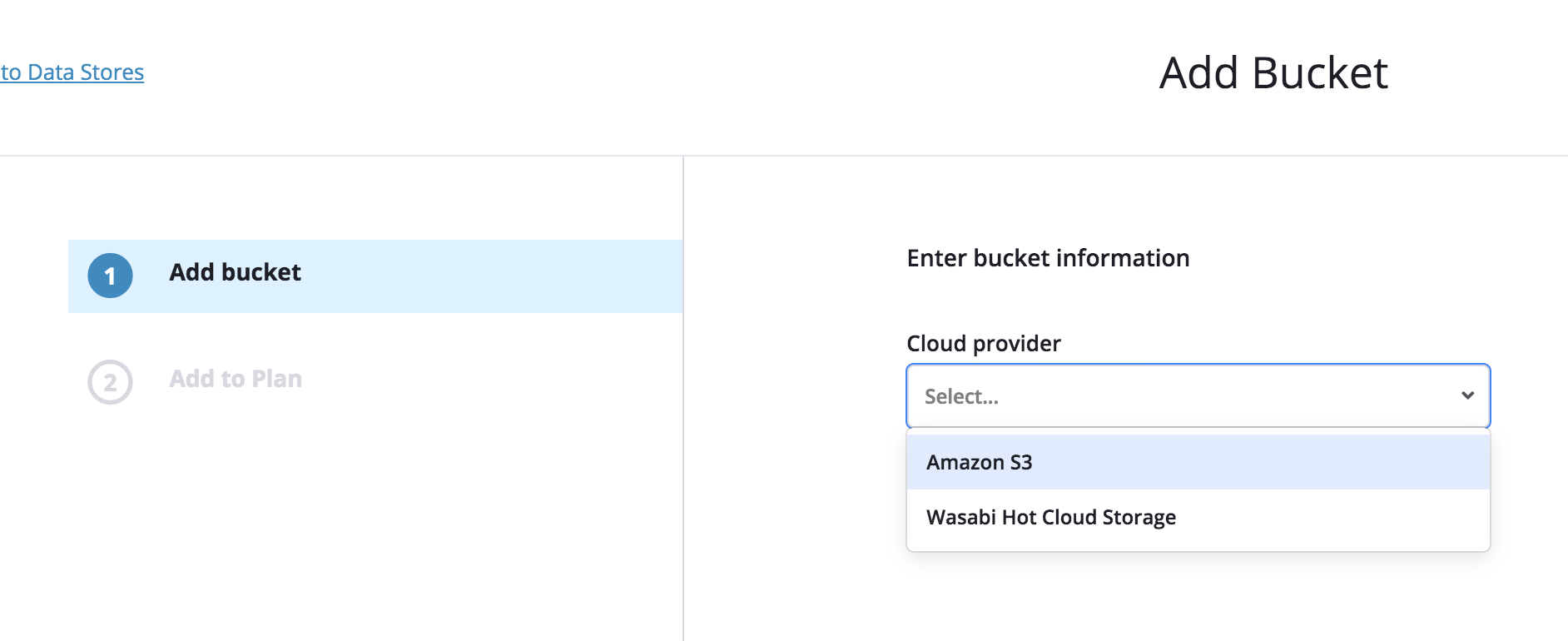
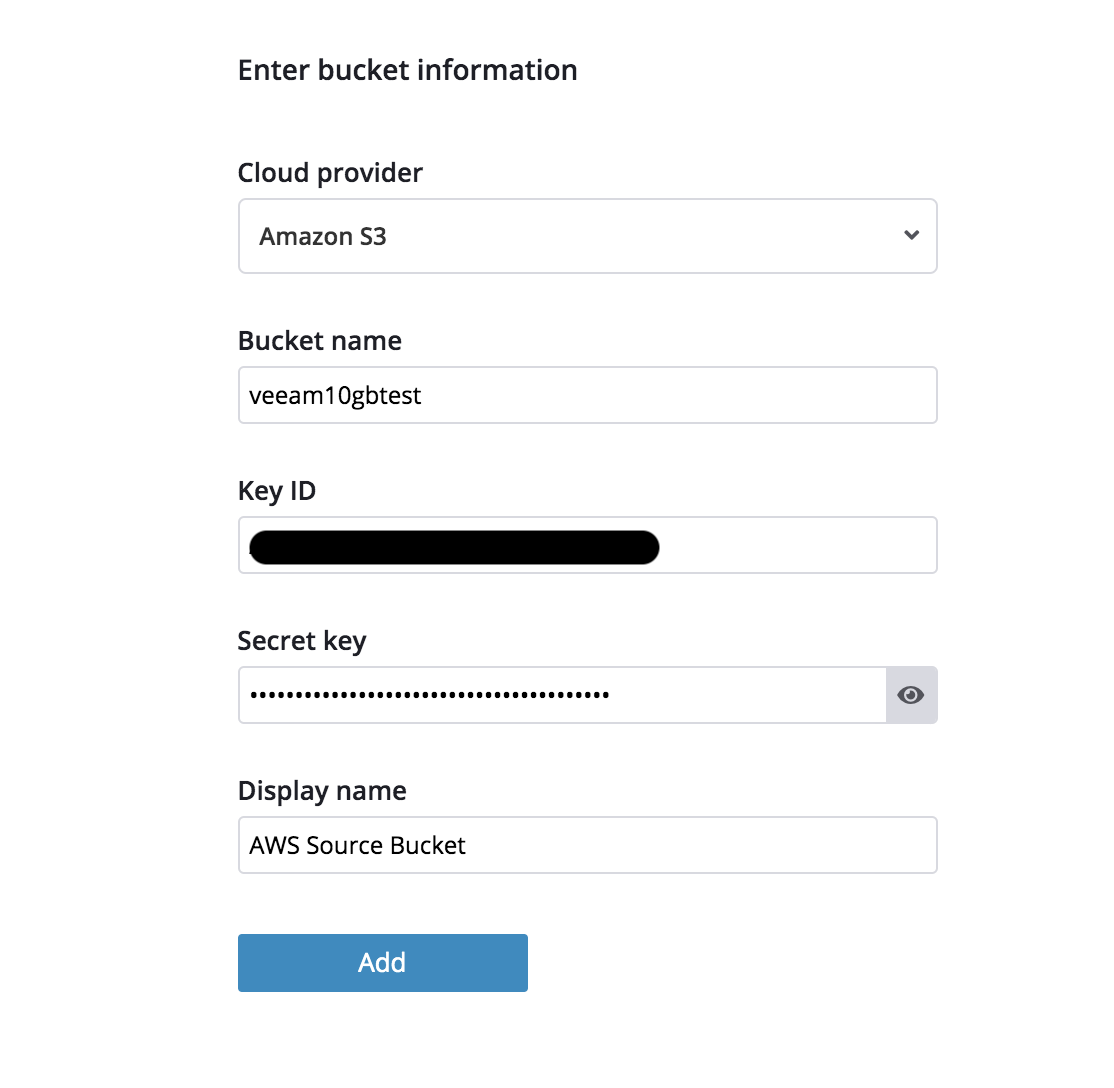
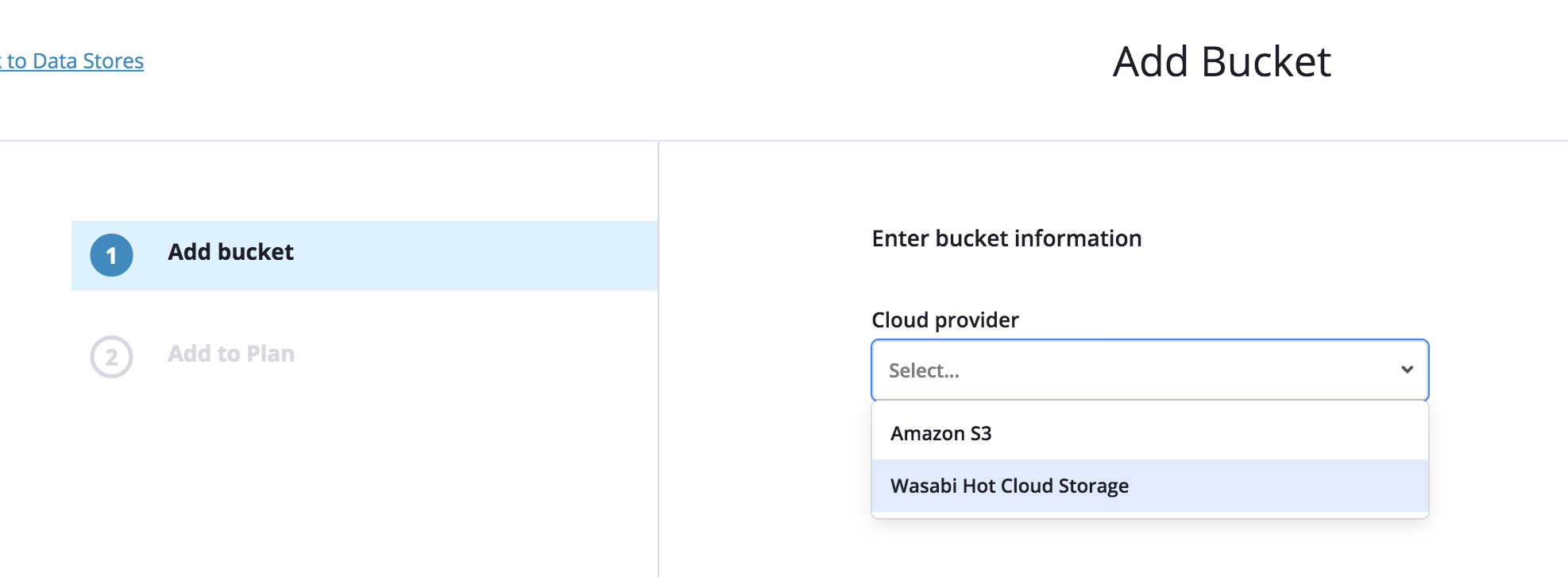
Choose Amazon S3 from drop-down option.
Provide the following information and click Add.
Bucket Name
Key ID
Secret Key
Display name
Optionally choose a plan, Cloud Transitioning (Available buckets), and click Add.
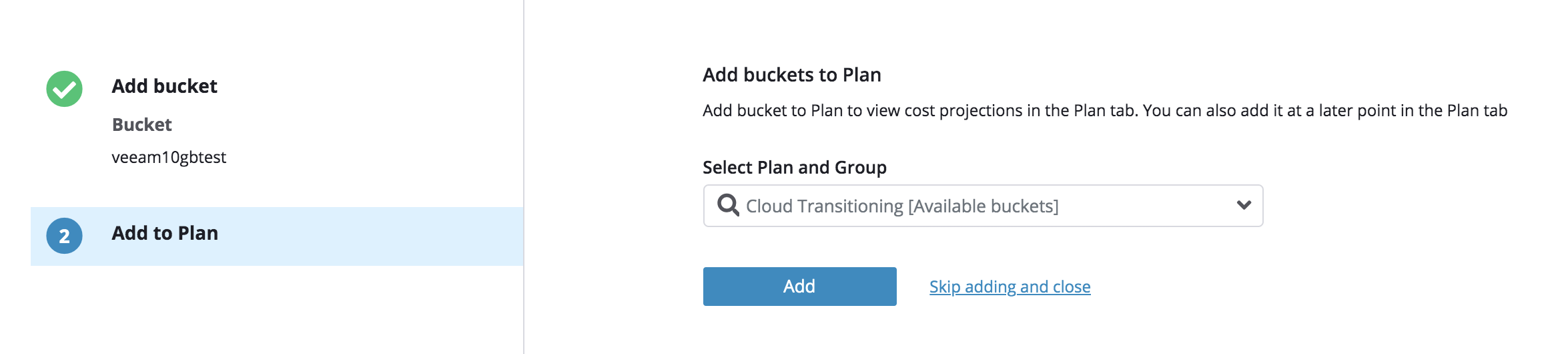
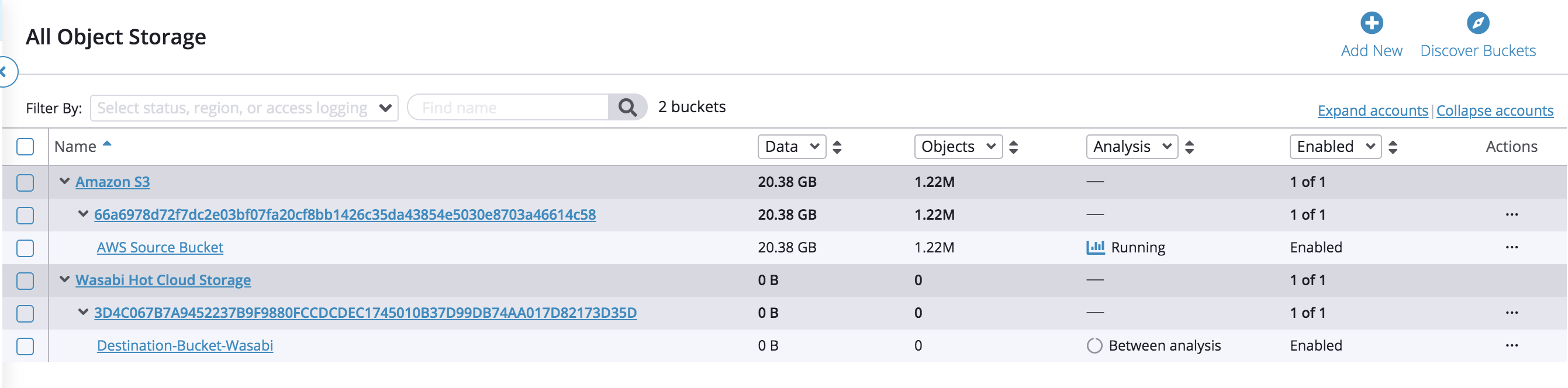
Once added, Komprise will analyze data inside your bucket.

Note: Komprise automatically generates a random Canonical ID for each bucket/account added to the service. This randomly generated ID is not searchable.
8. Click + Add New to add Wasabi as the destination bucket.
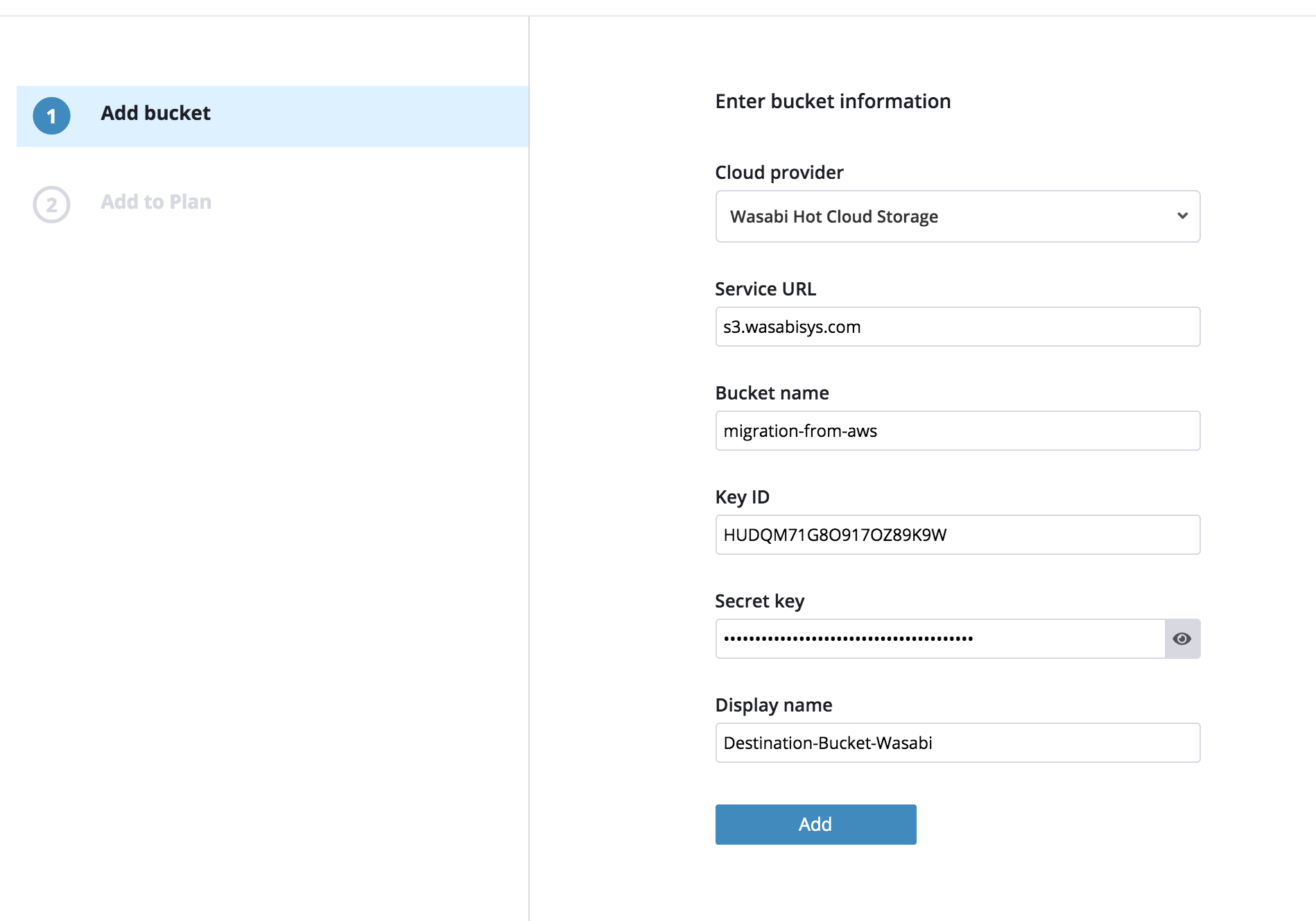
Provide the following info and click Add.
Service URL
Bucket name
Key ID
Secret Key
Display name
Note: This config example uses Wasabi’s us-east-1 storage region. To use other Wasabi storage regions, use the appropriate Wasabi service URL as described in this article.
Once added Komprise will run analysis on the destination bucket as well.
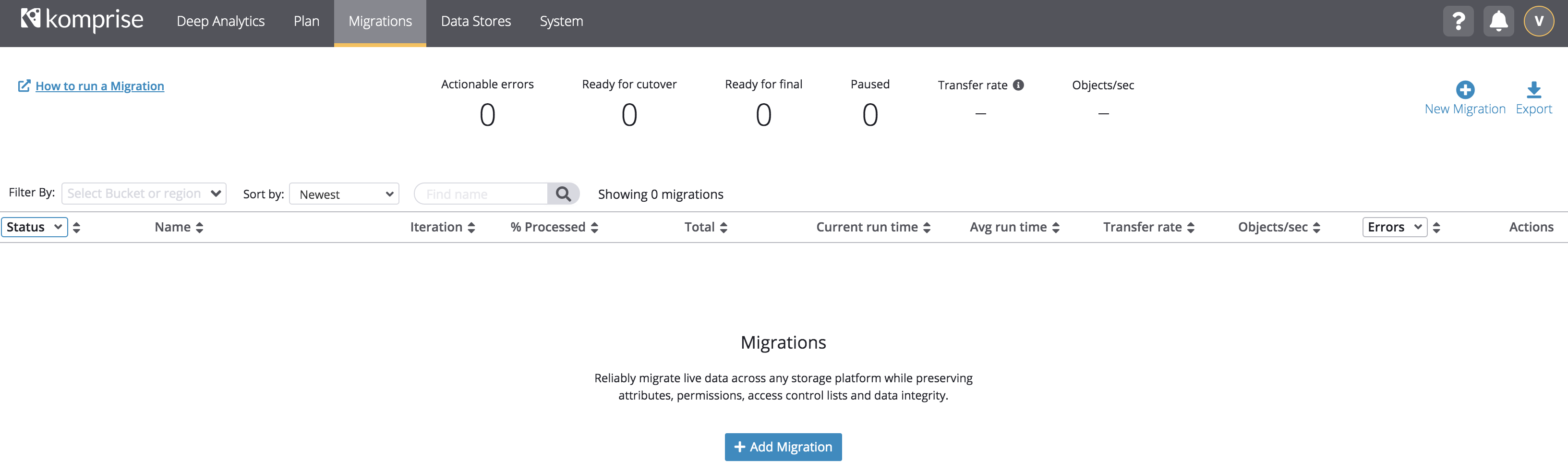
Navigate to Migrations and click New Migration.
Choose the source AWS bucket and click Next.
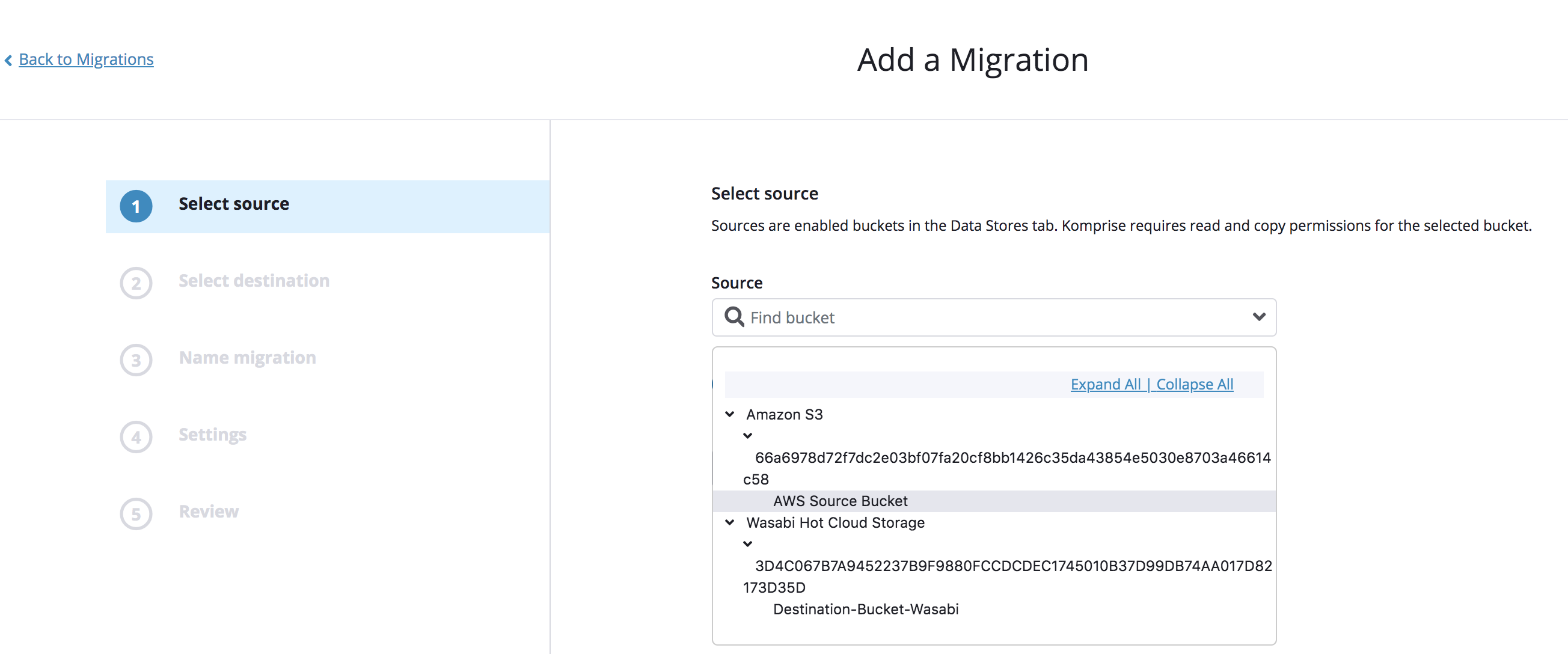
Note: Optionally, data with a set prefix could also be configured as part of the migration.
Choose the destination Wasabi bucket and click Next.
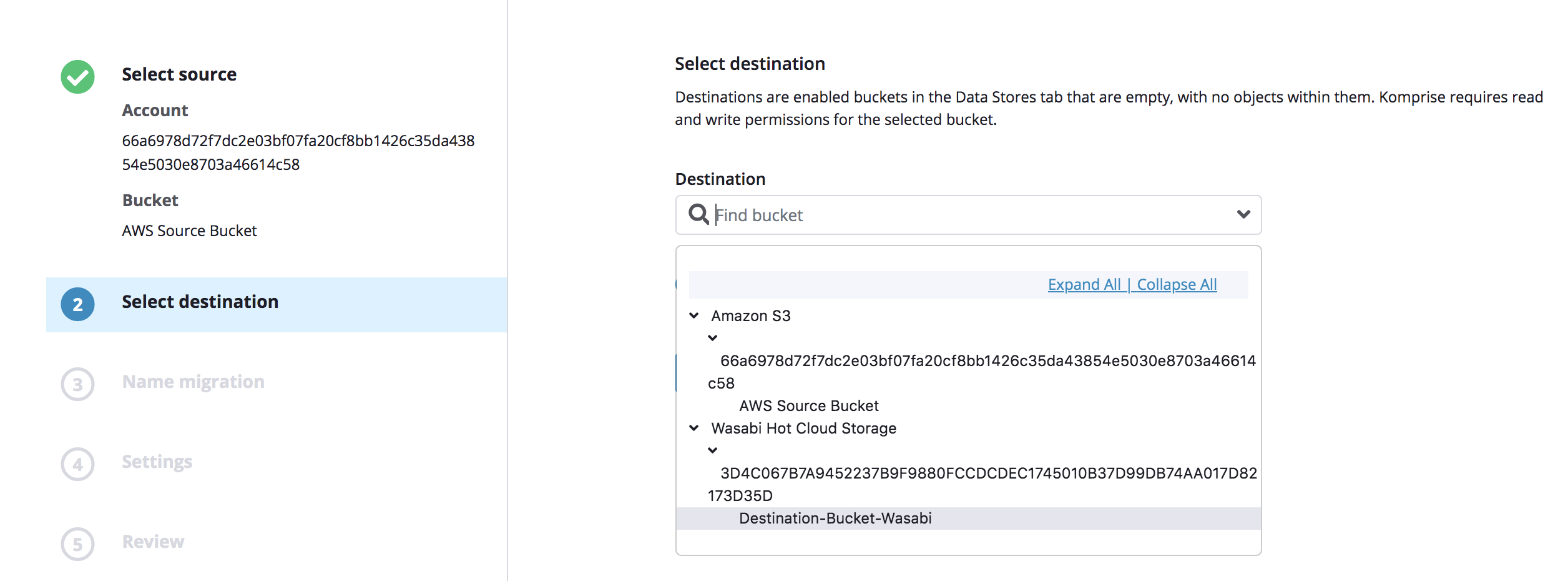
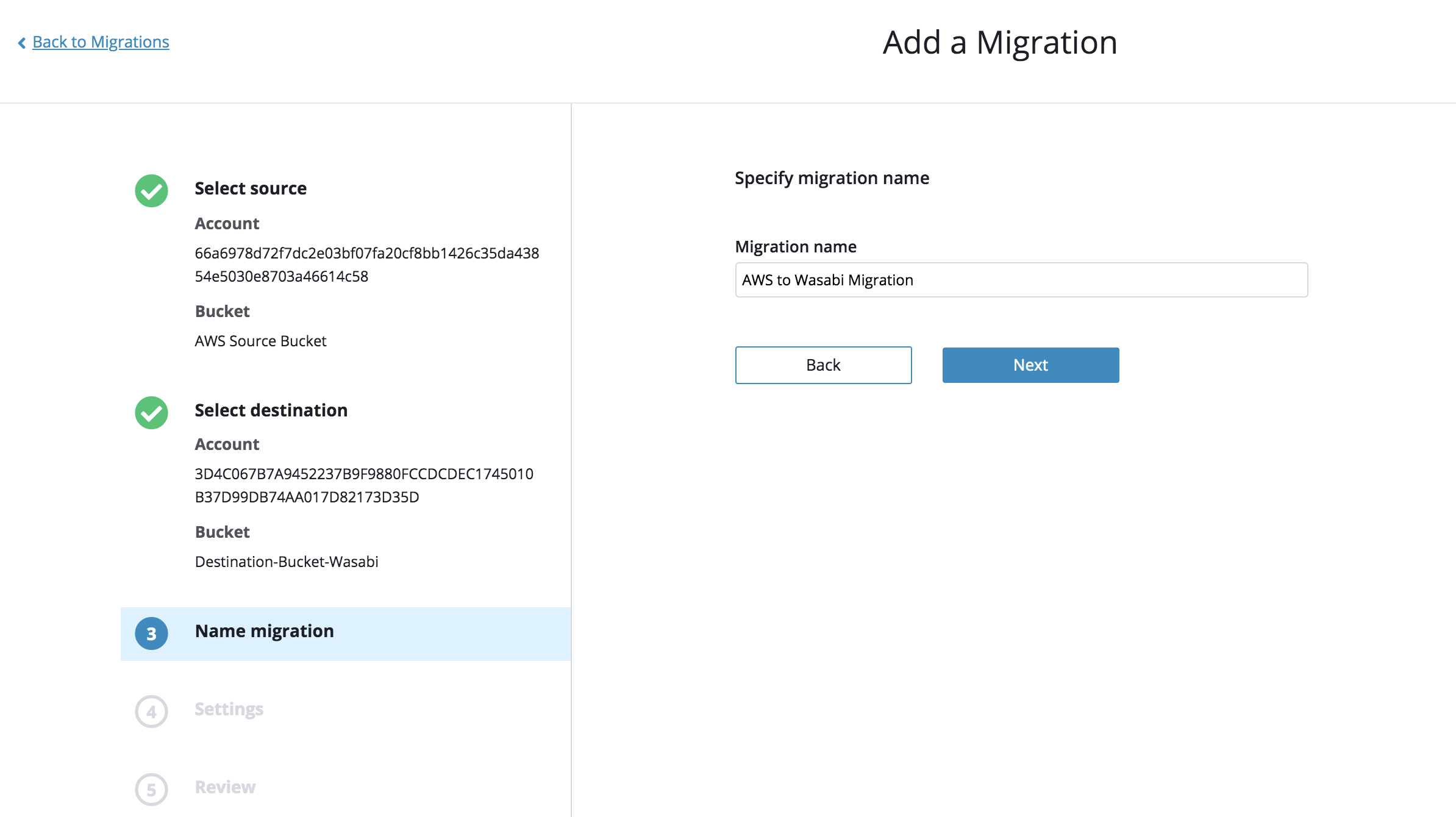
14. Provide the migration with a name.
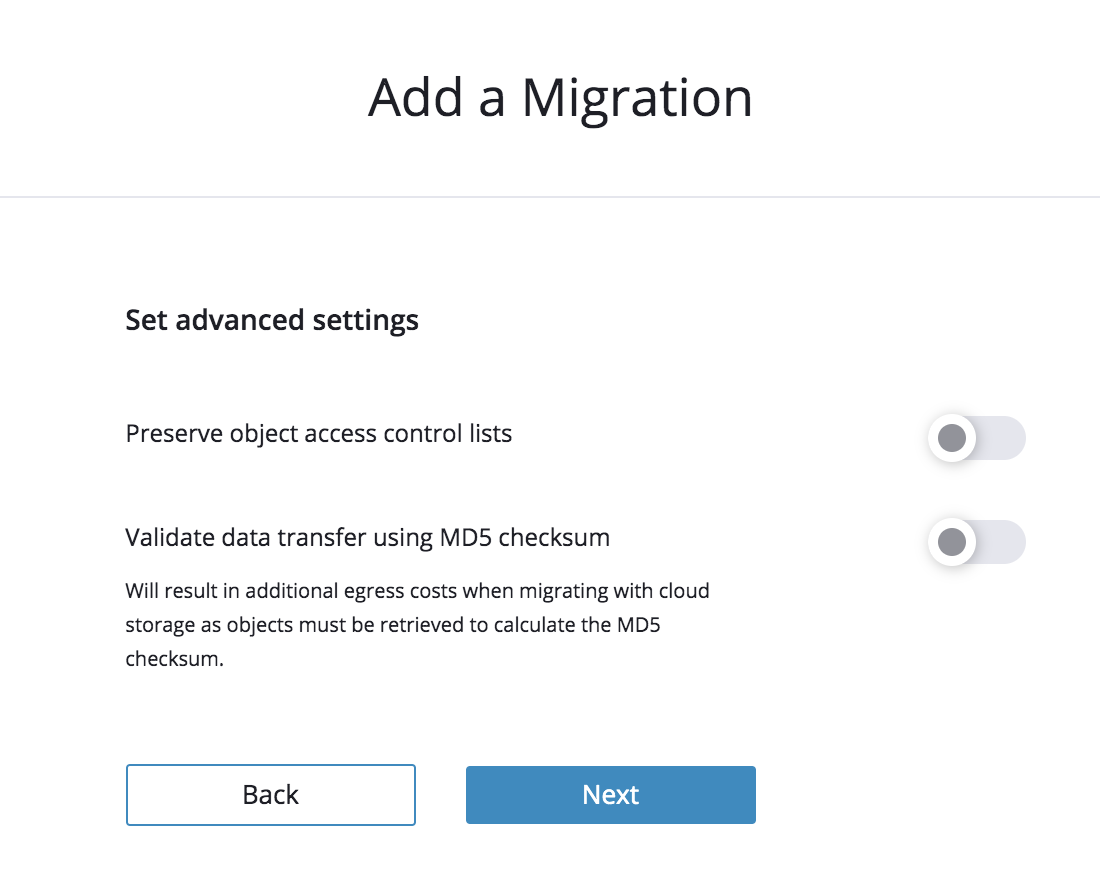
Uncheck Preserve object access control lists and click Next.
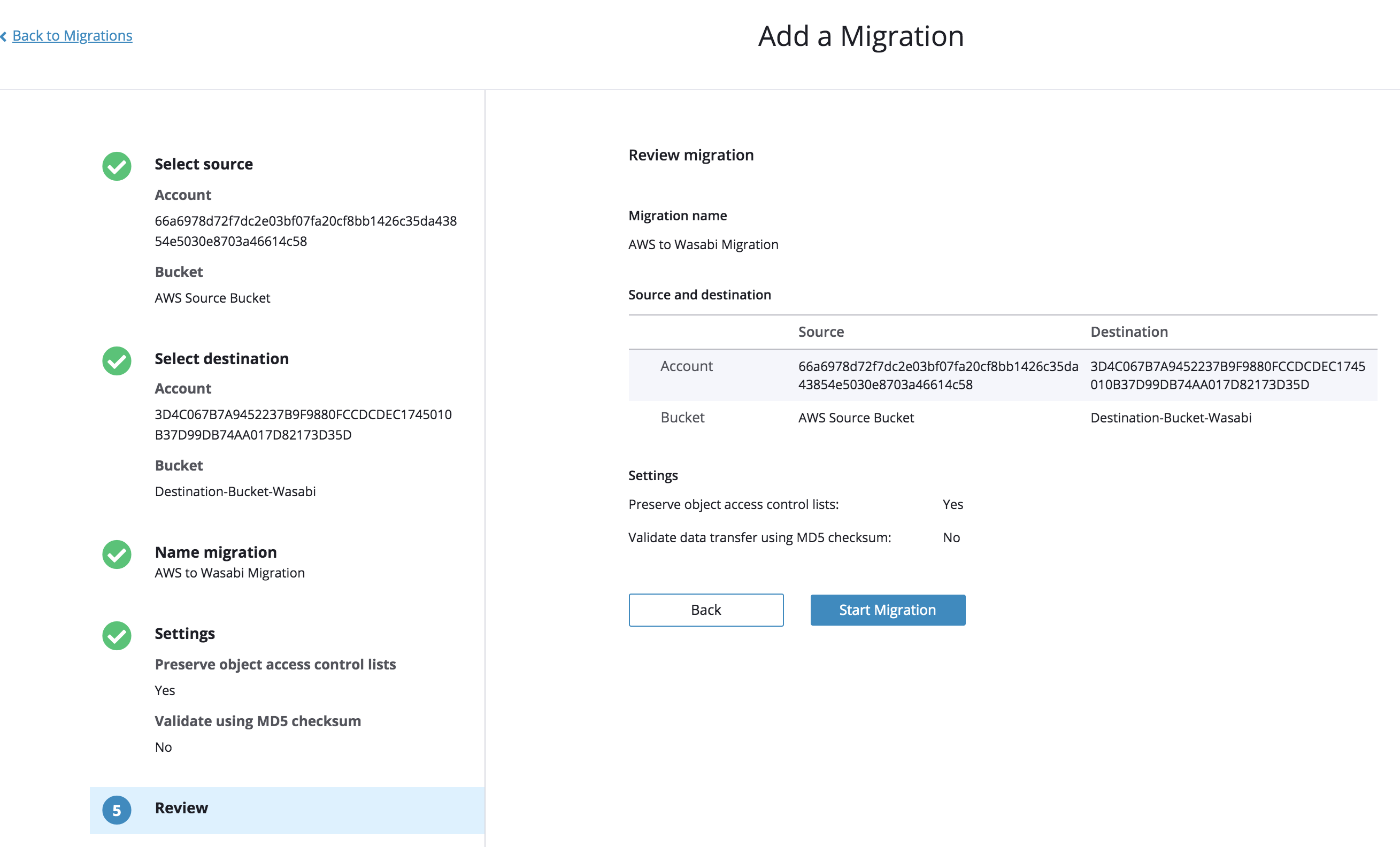
Review the migration details and then click Start Migration.
Once the migration starts, a progress report is available for review.
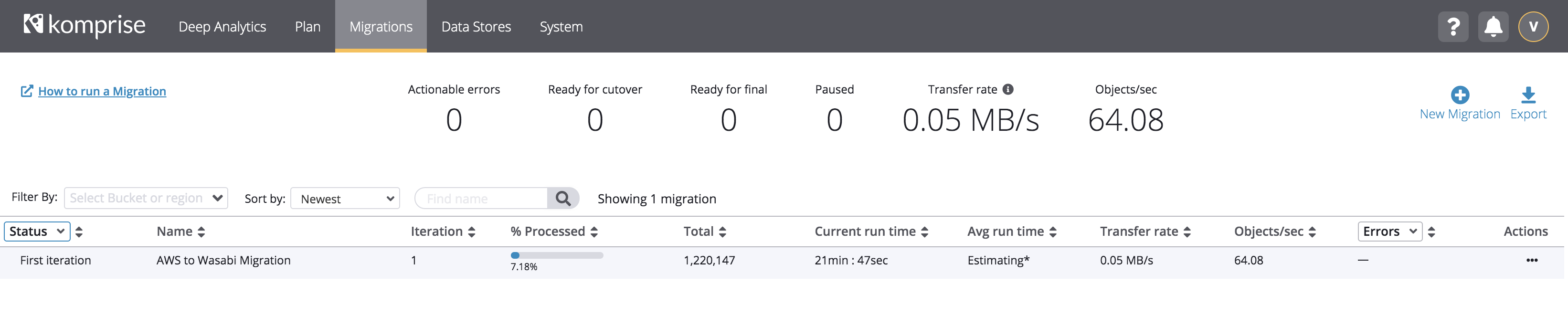
Optionally, click on ... and choose View details to review a detailed summary of the migration job.
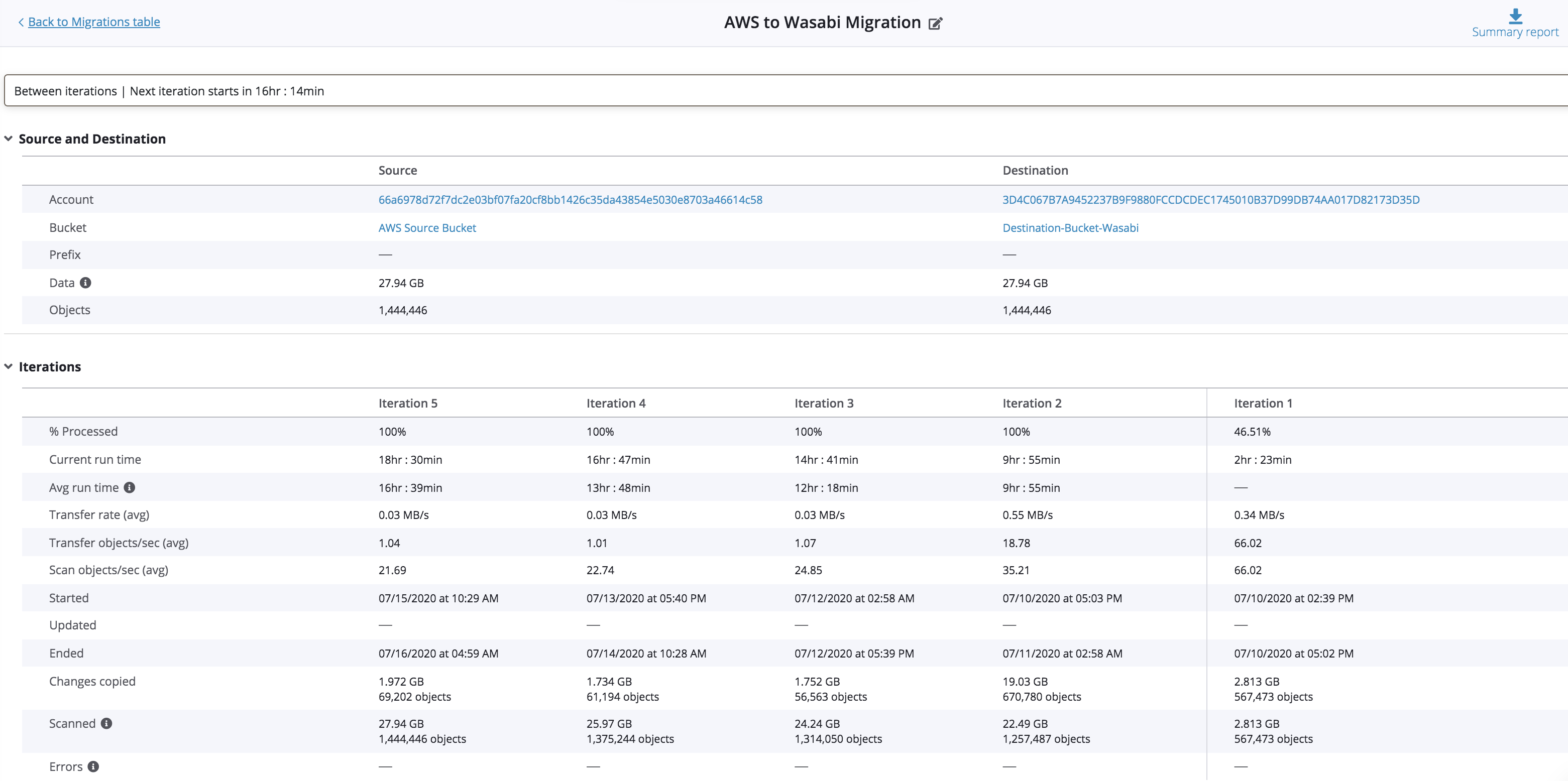
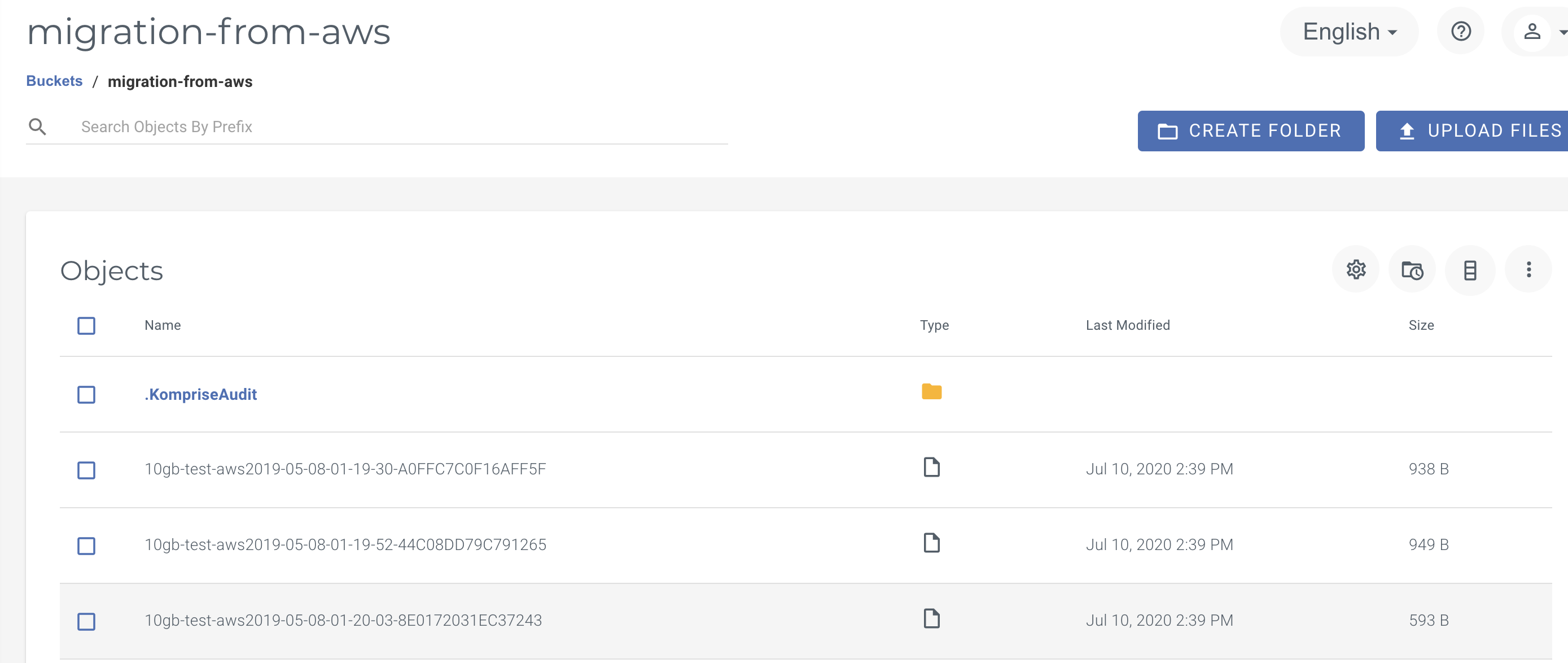
Once migration completes, all migrated objects will be available in the Wasabi bucket.