Wasabi is now certified for use with PoINT Storage Manager. PoINT Storage Manager is a policy-based file tiering and archiving solution that supports you in optimizing your storage infrastructure and in long-term storage of company data.
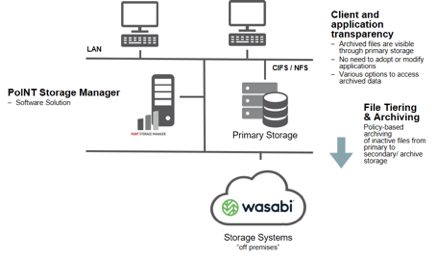
PoINT Storage Manager moves data from primary storage to Wasabi as part of an automated multi-tier hierarchical storage management (HSM) architecture to reduce data volume on the primary storage system. A key advantage of this solution is that archived data can still be accessed via the primary storage system’s file system, making the process fully transparent. Typical source systems are NetApp FAS, Dell EMC Unity, or Windows Server-based systems.
Requirements
PoINT Storage Manager Release 6.4 SP1 or higher
An active Wasabi account
Wasabi cloud bucket and access/secret keys
Reference Architecture
Configuring Wasabi as a New Archive Device
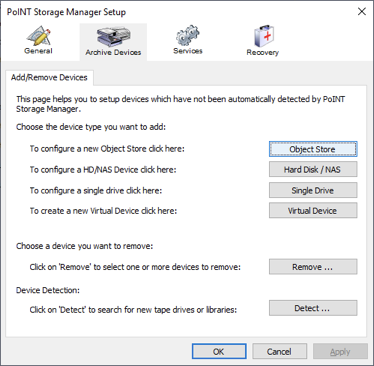
From the top menu bar, choose Archive Devices, then Configure Device to open the PoINT Storage Manager Setup and add a new target device.
Click Object Store from the list of available device types.
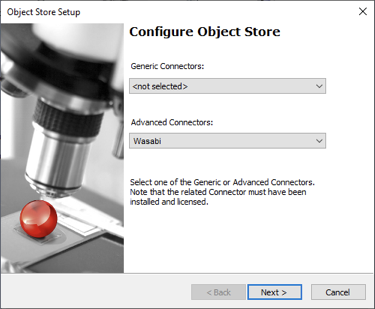
Choose Wasabi from the Advanced Connectors drop-down.
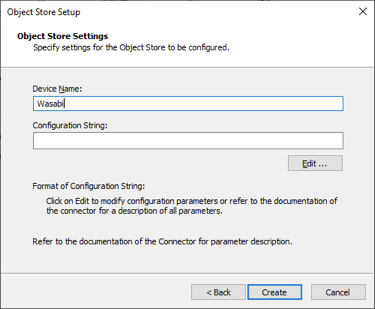
Type a Device Name and click Edit to configure parameters.
Configure parameters and click OK.
Address: s3.wasabisys.com
Bucket: Pre-configured bucket in Wasabi
AccessKeyId
SecretKey
Folder: Enter a Folder name (this is optional)
Region: Select your Region
Note that this config example uses Wasabi’s us-east-1 storage region. To use other Wasabi storage regions, use the appropriate Wasabi service URL as described in Service URLs for Wasabi's Storage Regions.
Note: Review the following article to access Access & Secret keys via the Wasabi console.
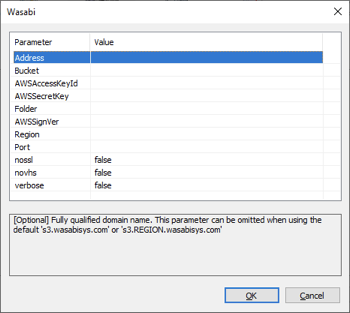
Click Create to finish device configuration.
Creating a Storage Vault to Archive Data to Wasabi Hot Cloud
The concept of PoINT Storage Manager is in the creation and execution of a Storage Vault. Creating a Storage Vault defines all parameters of the complete Archiving process. A Storage Vault specifies the type and location of its Storage Tiers, Migration and Archiving Policies, and any additional required configuration parameters.
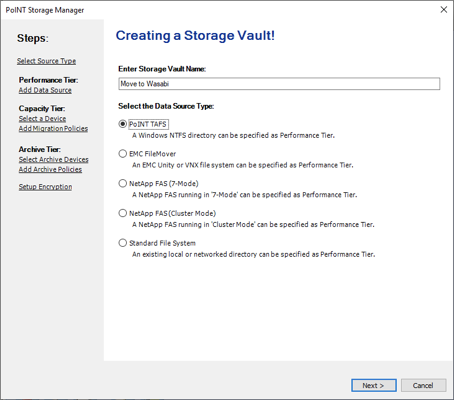
Type a Storage Vault Name, then select the Data Source Type based on your existing data storage infrastructure.
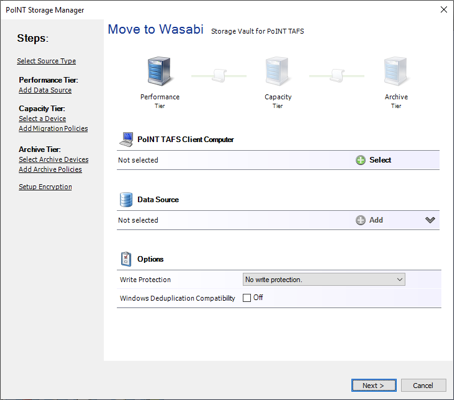
Select the Client Computer and Data Source. The dialog varies depending on the selected source server type.
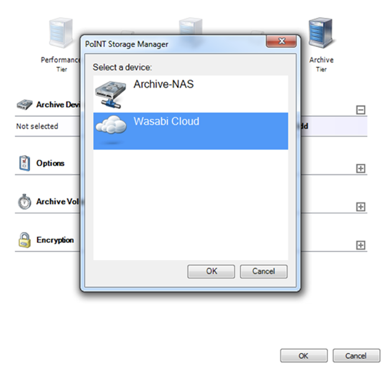
Select Archive Tier and click Add to display the list of configured Archive Devices.
Select Wasabi Cloud and Click OK.
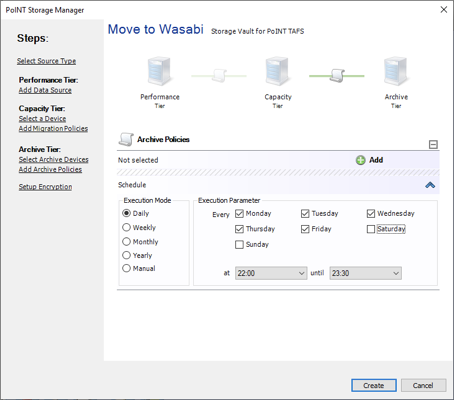
Click the scroll icon next to Archive Tier. Click Add to configure Archive Policies.
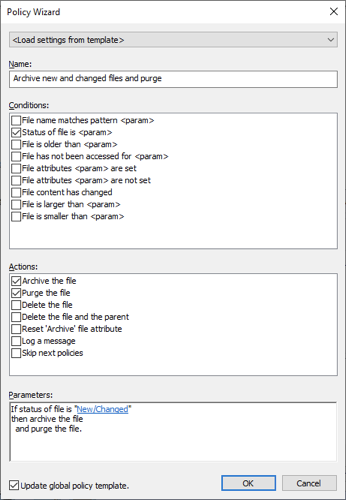
Choose a setting from pre-configured templates or define a new Policy. In this example, every new or changed file is archived to Wasabi and replaced with a stub to ensure transparent access.
Configure the schedule to determine the time window for archiving
Access Files Through Primary Storage
The single-point-access approach through the primary storage system (source system) enables transparent archiving and data retrieval for users and applications. It is not necessary to make any changes to the existing workflow. Transparent read access to archived files is enabled via stubs, and a direct-read mechanism retrieves files without restoring them to primary storage.
The following shows an example of a file before it was moved to Wasabi (on the left below) and the same file after it was moved to Wasabi (shown on the right).
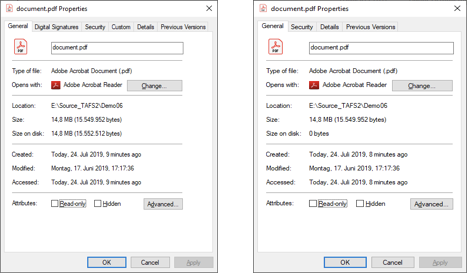
The same file (after being moved to Wasabi and replaced with a stub) is still visible in primary storage. The size on disk has been significantly reduced from 14.8 MB to 0 bytes (Note: The actual size is a few bytes, but Windows reports it as 0 bytes). This file can be accessed as before, and will be transparently retrieved from Wasabi by the PoINT Storage Manager.