EVO shared storage from Studio Network Solutions (SNS) enables a collaborative edit workflow across all major NLEs, as well as asset management and file automation tools for organizing and safeguarding data. Wasabi has been validated for use with EVO. To use this product with Wasabi, follow the instructions below.
Reference Architecture
.png)
Requirements
EVO v6.1.5 and above
Slingshot version 1.4
An active Wasabi account.
EVO’s included Slingshot automation engine can perform replication operations to automatically copy content to an external target on a schedule.
Follow the steps outlined below to connect EVO to your Wasabi bucket.
In the EVO web interface, navigate to the Slingshot, then to the Aliases page.
.png)
Click Add alias.
.png)
Give your Alias a name and select Amazon S3 as the schema.
.png)
Under Region, select Custom host and provide the correct service URL for your Wasabi region, and enter the bucket name as it appears in the Wasabi Console.
Enter the Access and Secret Keys generated in the Wasabi Console. The user who owns the keys will need read/write access to the bucket to compare source and destination contents, and to write new content to the destination. If the root user is not entered, the provided user will need access to all S3 resources.
.png)
Note: This config example discusses the use of Wasabi’s us-west-1 storage region. To use other Wasabi storage regions, use the appropriate Wasabi service URL as described in this article.
Click Save Changes, allow a few moments for authentication to complete, and confirm that a Volume ID is displayed to indicate successful registration.
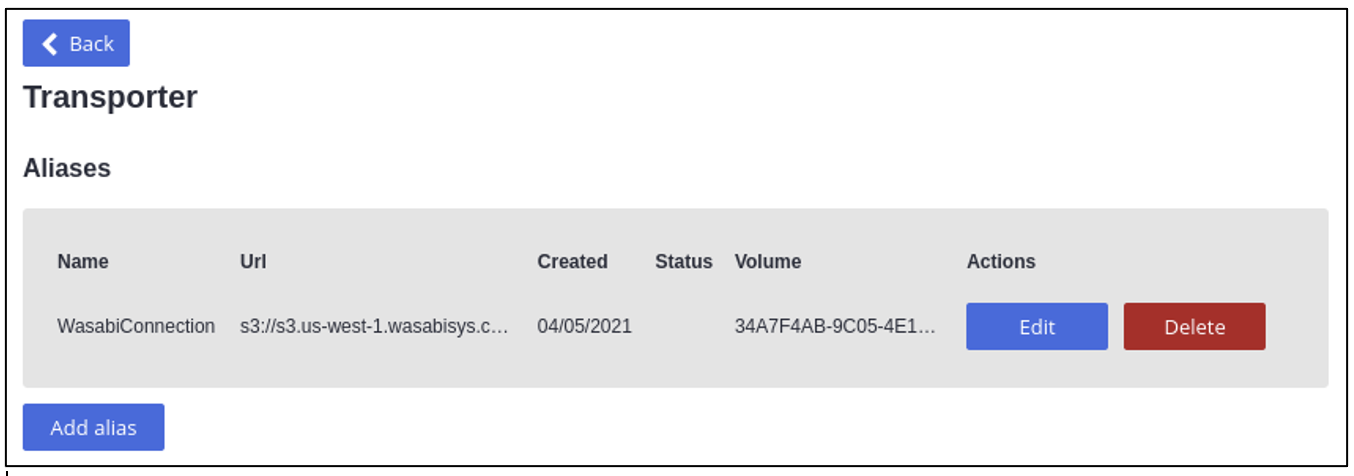
Navigate back to the Slingshot page to create a new replication job.
.png)
Choose the source to replicate to Wasabi, and set the destination to the S3 target. Note that by default, this will create a folder on the destination with the same name as your job. The relative path can be changed if needed, or left empty to create the files at the root of the bucket.
The default method is Copy/Replace, which means content removed from the source will not be removed at the destination, so the job will only ever add updated content. The other option is Sync/Remove, in which case content deleted from the source will also be deleted from the destination the next time the job is run.
.png)
Note: If ShareBrowser is used with EVO, take care not to manually modify the destination content after replication, as this can create a discrepancy in the ShareBrowser database. It’s expected that only Slingshot will be used to modify replicated contents at the destination directory.
More details about advanced configuration options are found in this Slingshot Knowledge Base article, and SNS support can provide additional assistance if needed.