Reviewing the Replication Job Listing
Click to select the bucket on the Buckets list. Click  to open Settings. Click the Object Replication tab.
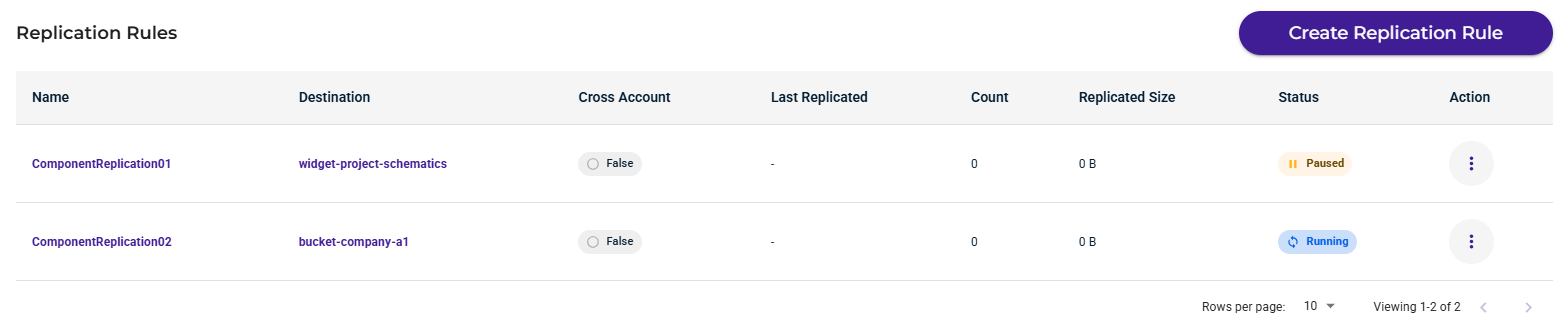
Each Replication Rule is listed with:
Name of the replication job
Destination bucket to which objects will be copied
Cross Account indication (False) that the replication job is for objects in the same account or (True) that the replication job is for objects across different accounts
Last Replicated date/time when objects were last replicated
Count, which is the number of objects replicated on the Last Replicated date
Replication Size, which shows the total size of the objects last replicated
Filters, which indicates a prefix and/or object tag filter was (Yes) or was not (No) specified when creating the job
Status, which will be
 or

Action, which offers a menu
 with options to Pause/Resume or Delete the replication job
The following is a sample of an actively running replication job. In this case, the last replication occurred on Nov 10, 2023, and 31 objects (totaling 2.47 MB) were replicated to widget-components-project (the destination bucket).
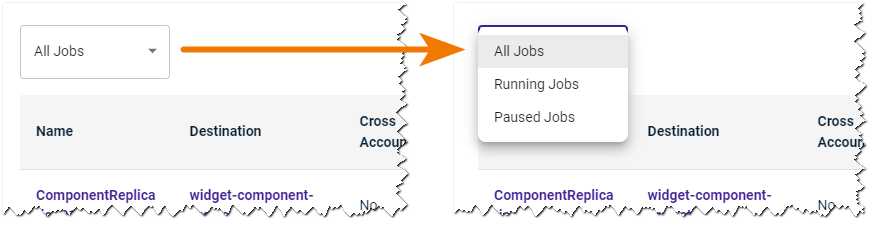
If you have a long list of replication jobs, use the list options to display all jobs, only jobs that are running, or only paused jobs:
Viewing/Editing a Replication Rule
Click the name of the replication rule that you want to view or edit. The Rule Details and Properties are displayed.
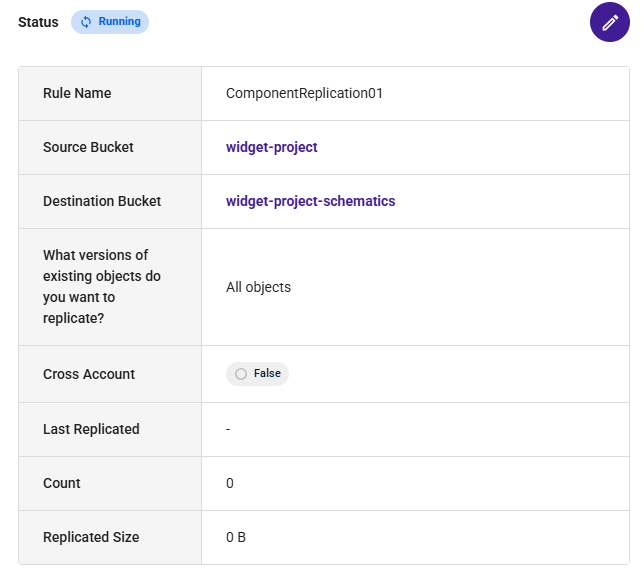
You can click
 to change the job filters and advanced options. You cannot change any other settings.
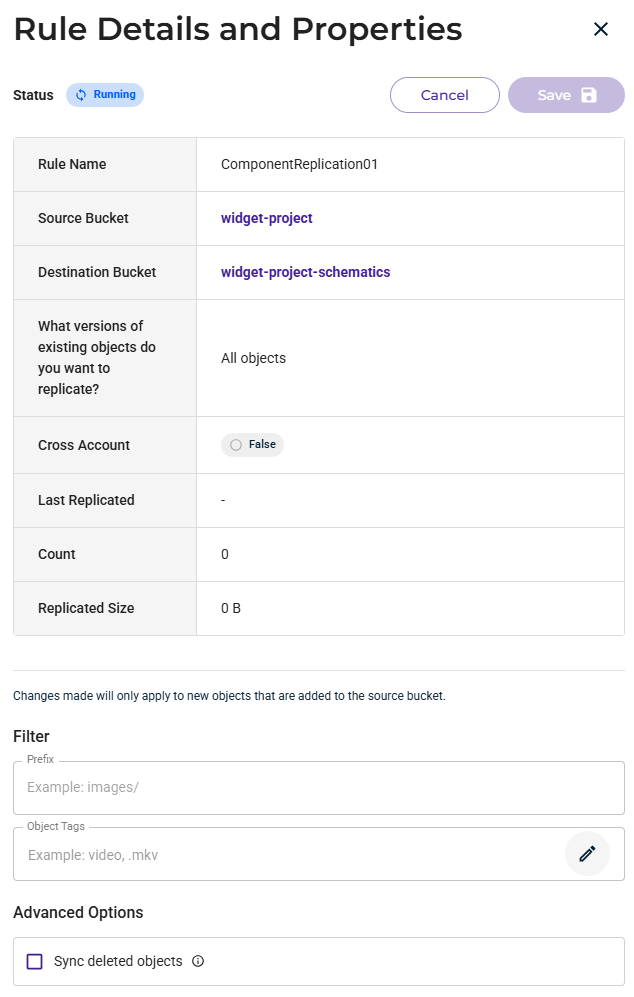
If you make changes, click Save. Otherwise, click Cancel to return to the Rule Details and Properties.
Click X to return to the Replication Rules.
Changes will apply only to new objects added to the source bucket.
Pausing or Resuming a Replication Job
To pause a job:
Click
for the replication job that you want to pause.Select Pause.
Click Pause to confirm that you no longer want to replicate objects.
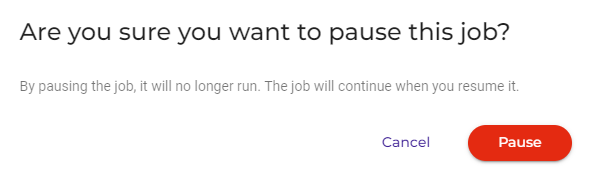
To resume running the replication job:
Click
for the replication job that you want to resume.Select Resume.
Click Resume to confirm that you want to replicate objects again.
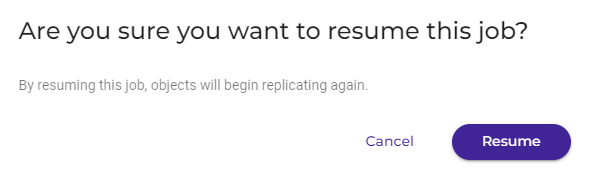
Deleting a Replication Job
Click
for the replication job that you want to delete.Select Delete.
Be sure you want to delete the job because it may disrupt replication that is running (in progress). Click Delete to confirm.

Reviewing the Batch Replication Jobs Listing
You can click the down arrow to the right of Batch Replication Jobs to see additional information about the jobs.
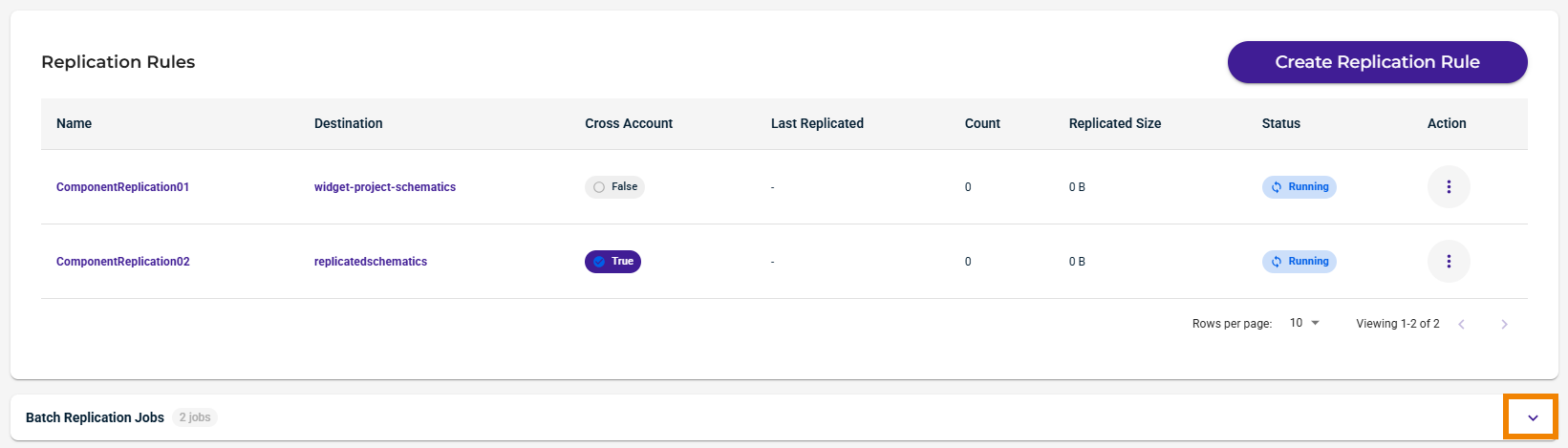
For example:
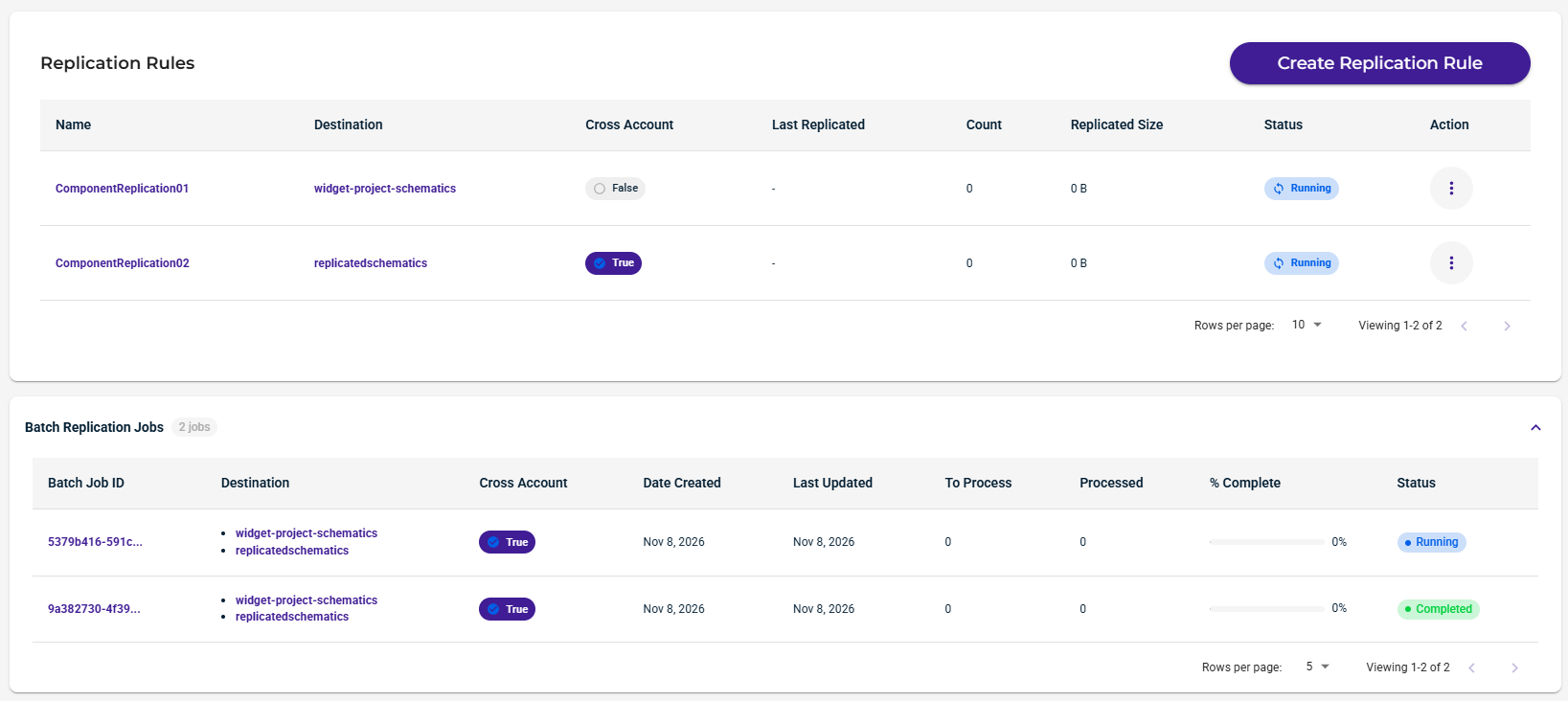
As with a rule, you can click a job name to view its details. However, you cannot edit a job.
Each Batch Replication Job is listed with:
Bactch Job ID of the replication job
Destination buckets to which objects will be copied
Cross Account indication (False) that the replication job is for objects in the same account or (True) that the replication job is for objects across different accounts
Date Created, which is the date on which the job was initially created
Last Updated, which is the date when the job was last updated
To Process is the number of objects to be processed
Processed is the number of objects that have been processed
% Completed is the percentage of the job that has been completed
Status of the job, which will be
 or

Email Reporting of Object Replication Jobs
You can enable a feature to receive email notifications for your replication jobs:
Existing objects have begun replicating (batch replication only)
Existing objects have finished replicating (batch replication only)
Existing objects have failed to replicate (batch replication only)
New object replication failures (live replication only)