BDRSuite offers comprehensive backup and DR solutions for virtual, physical, cloud, and SaaS workloads, ensuring robust data protection against cyber threats.
Requirements
Wasabi Cloud Storage Account
Wasabi Bucket— See our Bucket Creation Guide
Access and Secret Key Pair—See our Access Keys Guide
BDRSuite Backup and Replication version 7.0.1
Reference Architecture Diagrams
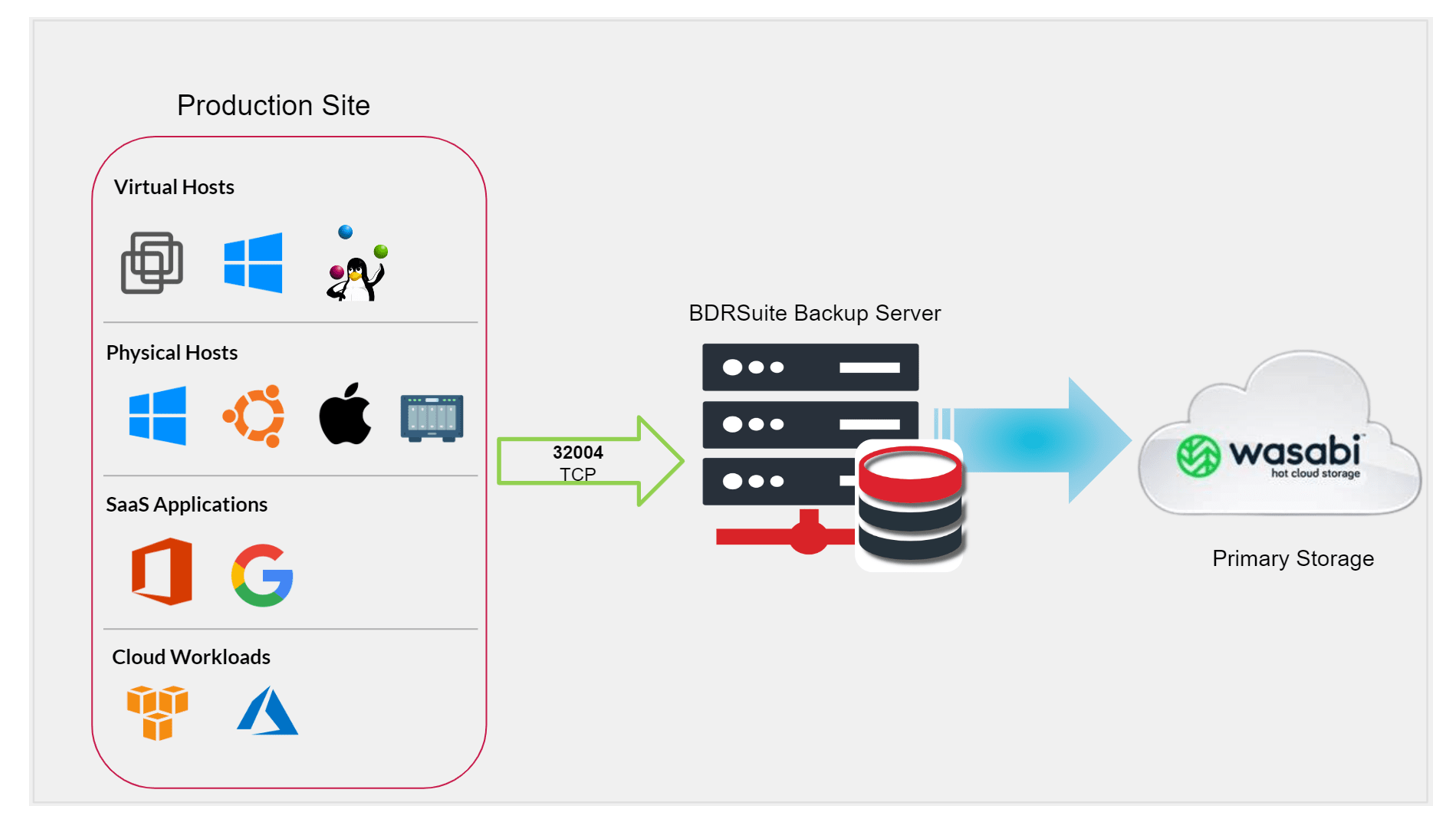
Workflow #1 - Storing Primary Backup Data on Wasabi:
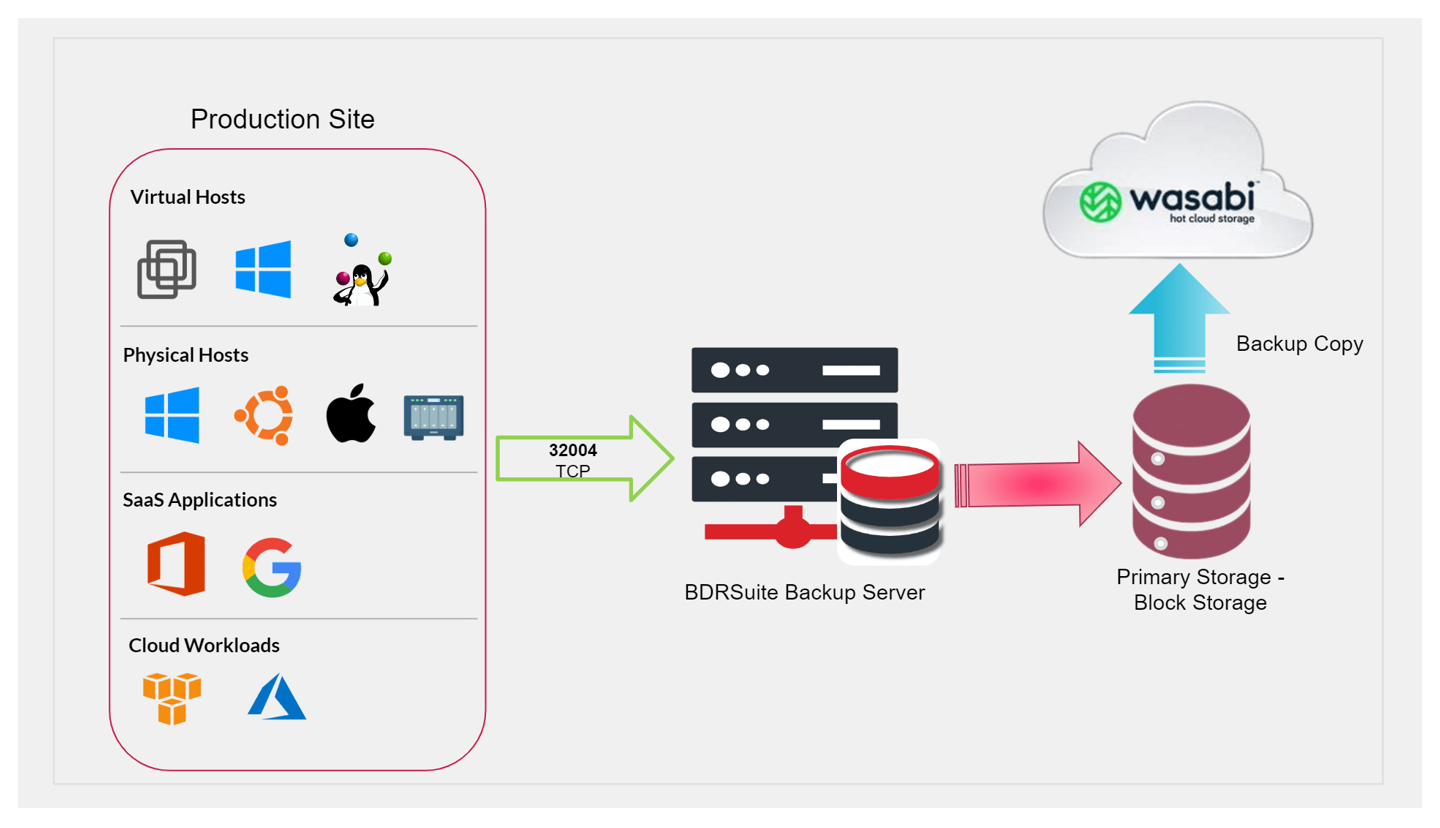
Workflow #2 - Storing Secondary Backup Data on Wasabi.
Adding Wasabi as an Object Storage Repository
Log in to the BDRSuite Backup Server console.
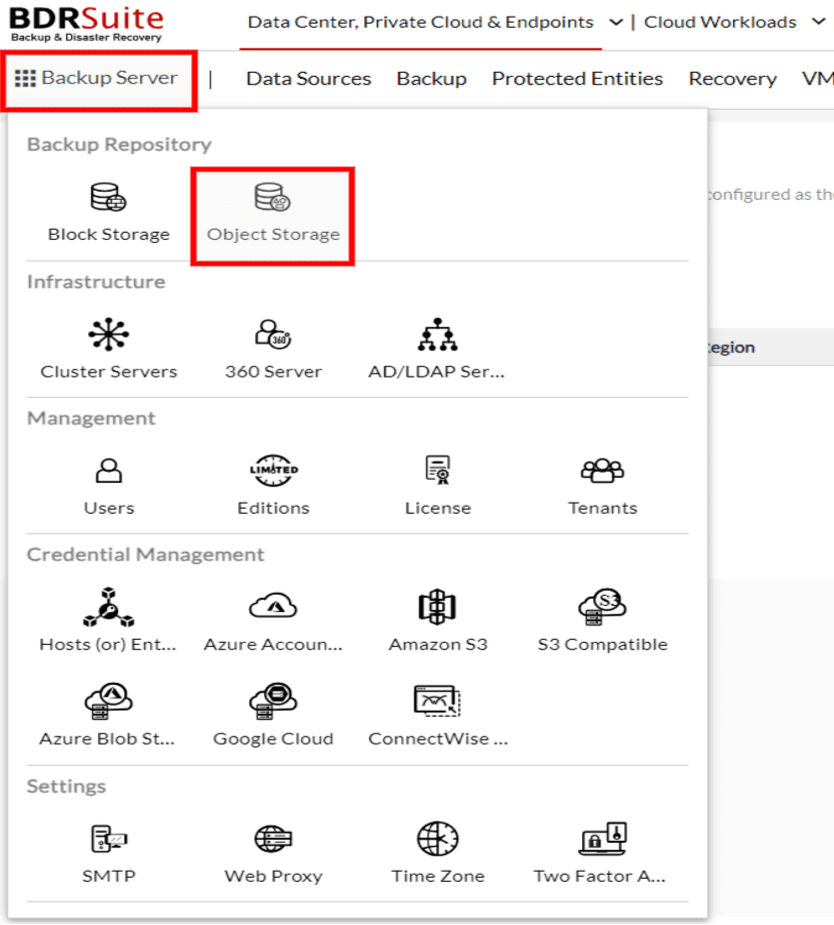
Navigate to the Backup Server tab. Click Backup Server.
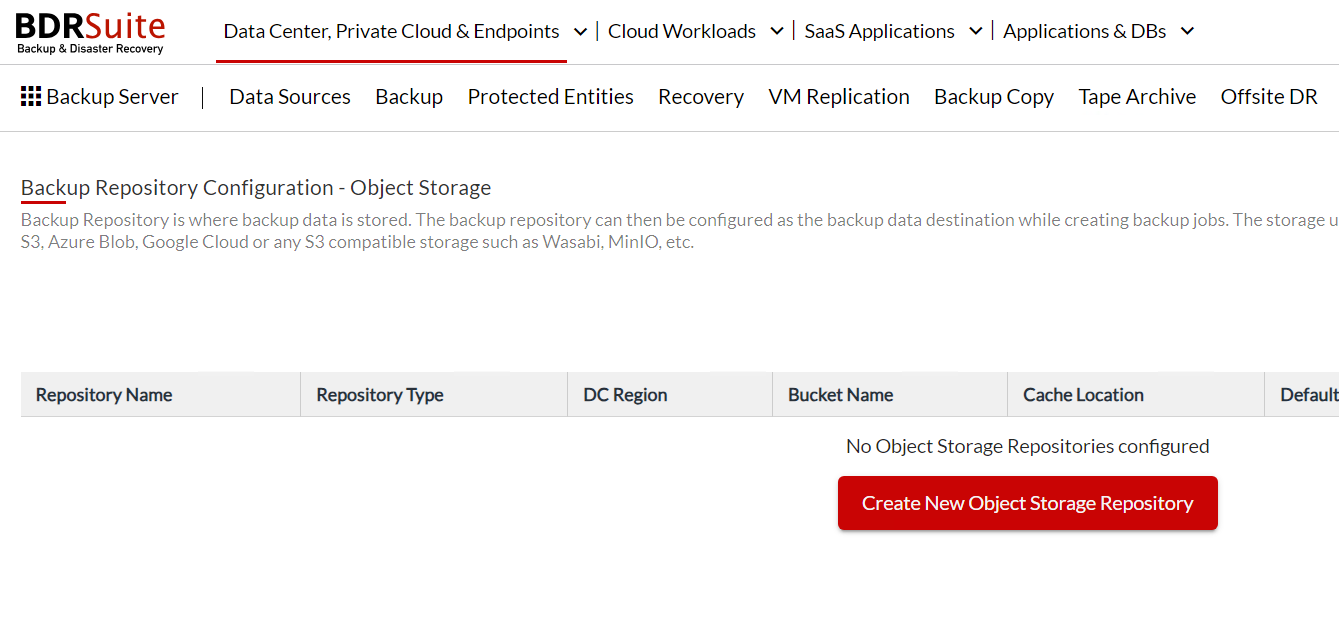
Click Object Storage.
Click Create New Object Storage Repository.
Enter the following information:
Repository Name—Specify a unique name for the repository.
Repository Type —Choose S3 compatible, which will be Wasabi.
Set as the default repository—Select Yes or No.
Service Endpoint — Enter the Wasabi Datacenter Service URL specific to where you created your bucket.
DC Region — Specify the Data Center location.
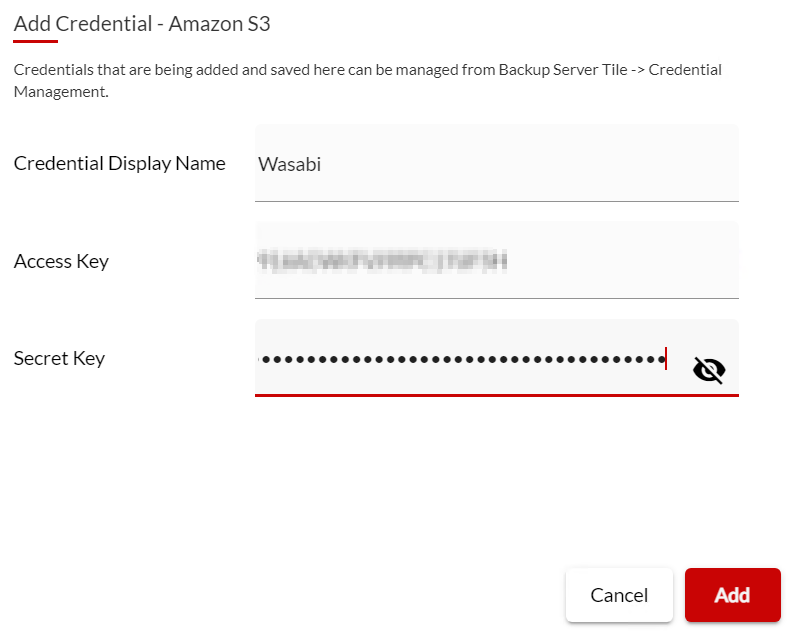
Credential— Click Add New Credentials. Specify a credential name to identify your credential record and provide the Secret Key and Access Key of your Wasabi Cloud Storage Account. You can manage all the S3 Compatible Storage account Credentials from the Backup Server Tile, Credential Management, and then S3 Compatible.
Bucket Name—Open the drop-down list and select the bucket that you pre-created.
Immutable Backups —You can enable the Immutable Backup feature by checking the box. This will secure your backups as immutable for a specific duration. The duration can be set to 999 days. The duration set here will apply only to this repository.
Cache Location—Choose a cache location to temporarily store backup data before uploading it to Wasabi Cloud Storage. Local drives and Network drives added to the BDRSuite Backup Server will appear in the drop-down menu and can be selected as the Cache Location.
Click Create.
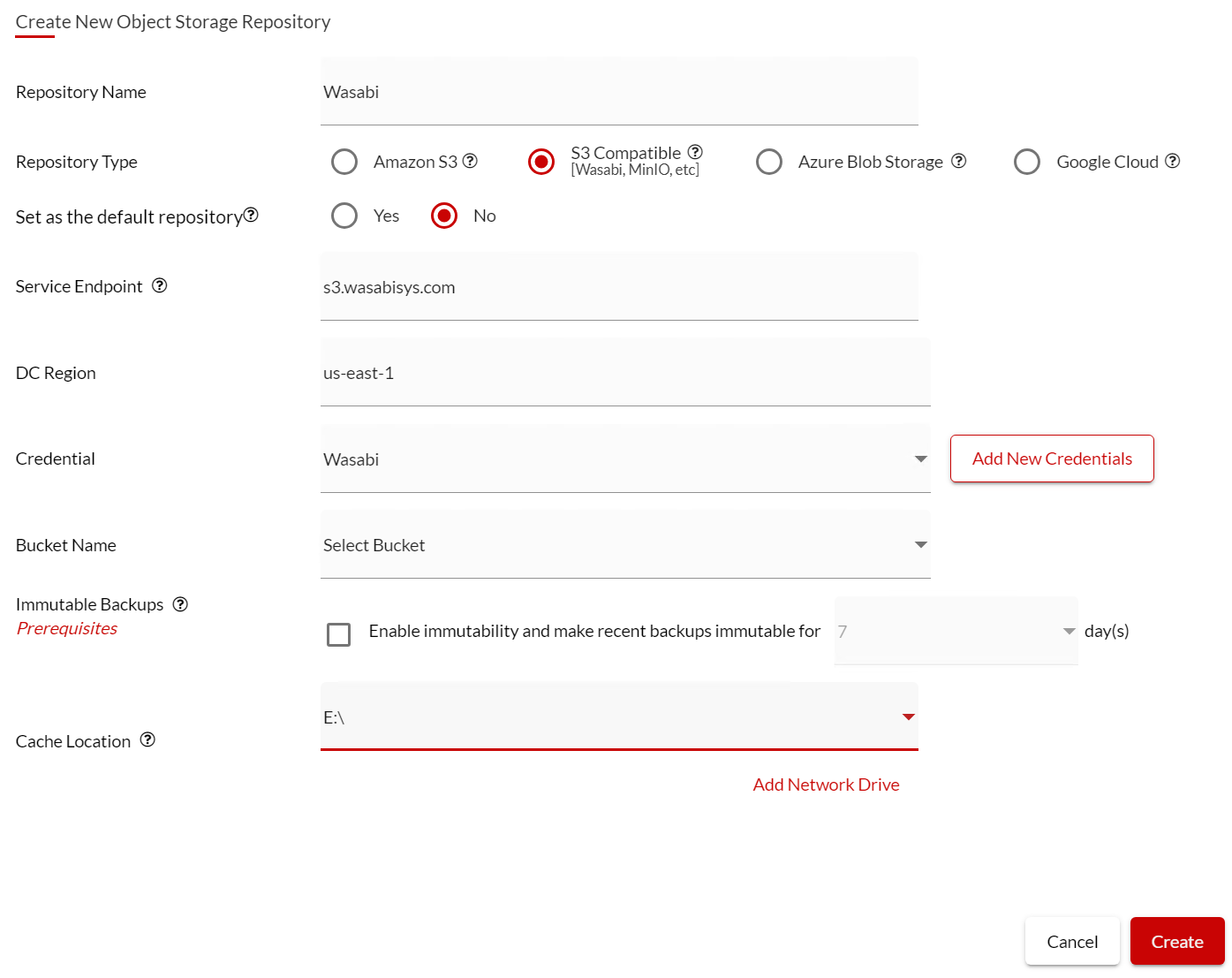
This configuration example uses Wasabi’s us-east-1 storage region. To use other Wasabi storage regions, use the appropriate Wasabi service URL as described in this article.
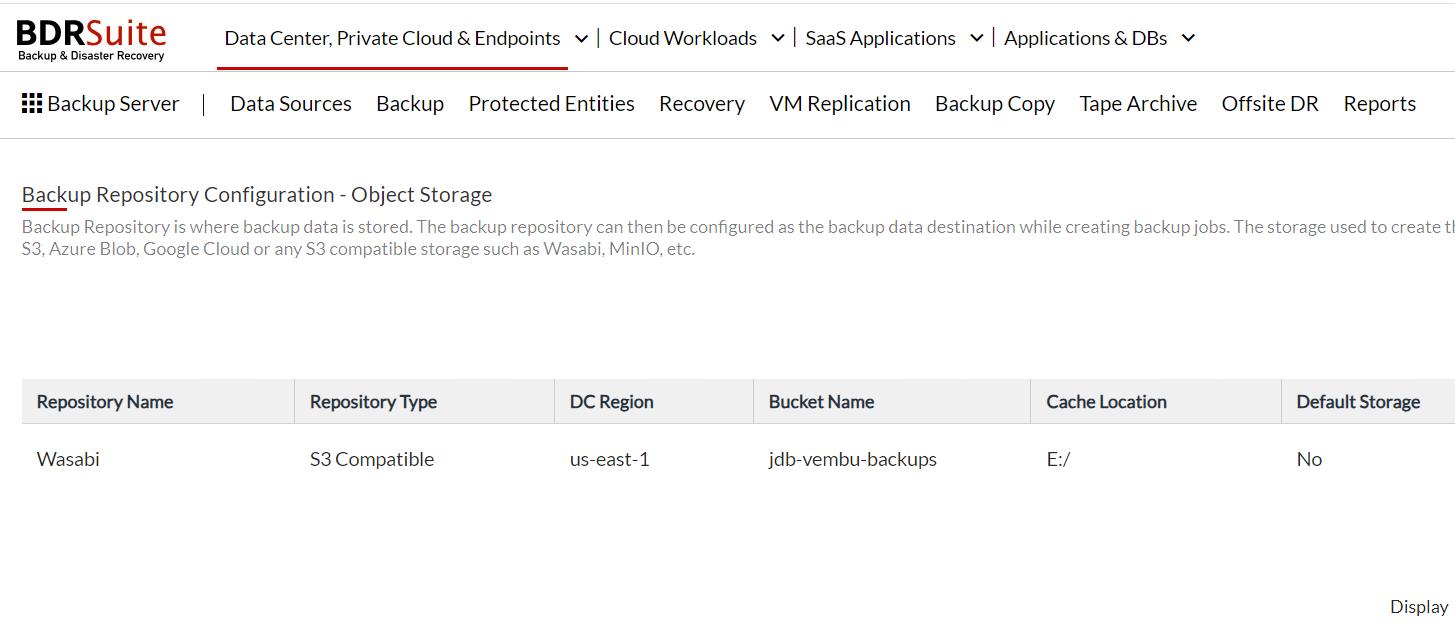
You will now see your Repository listed.
Configuring a Backup Job
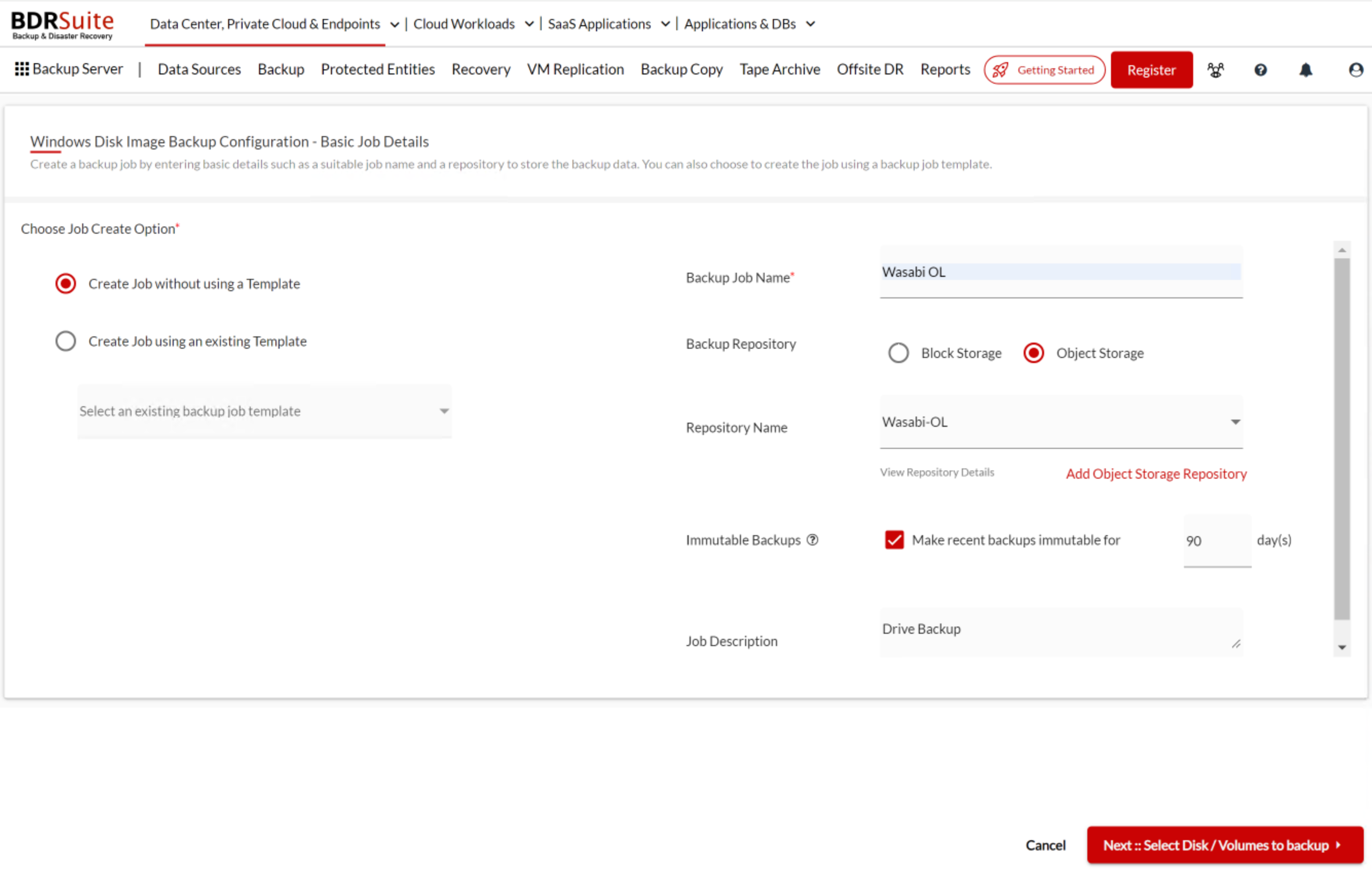
Navigate to the Backup tab. Select Configure Backup.
Enter the following information:
Backup Job Name—Give the backup job a unique name.
Backup Repository—Select Object Storage and from the drop-down list, select the Wasabi Repository name.
Immutable Backups—Check the box to make backups immutable, then specify the number of days to retain immutability.
Job Description—Provide a unique description for the job.
Click Next:: Select Disk/Volumes to backup.
Proceed with the following steps: selecting Disk/Volumes to back up, Guest Processing, Scheduling, and Retention/Encryption Settings.
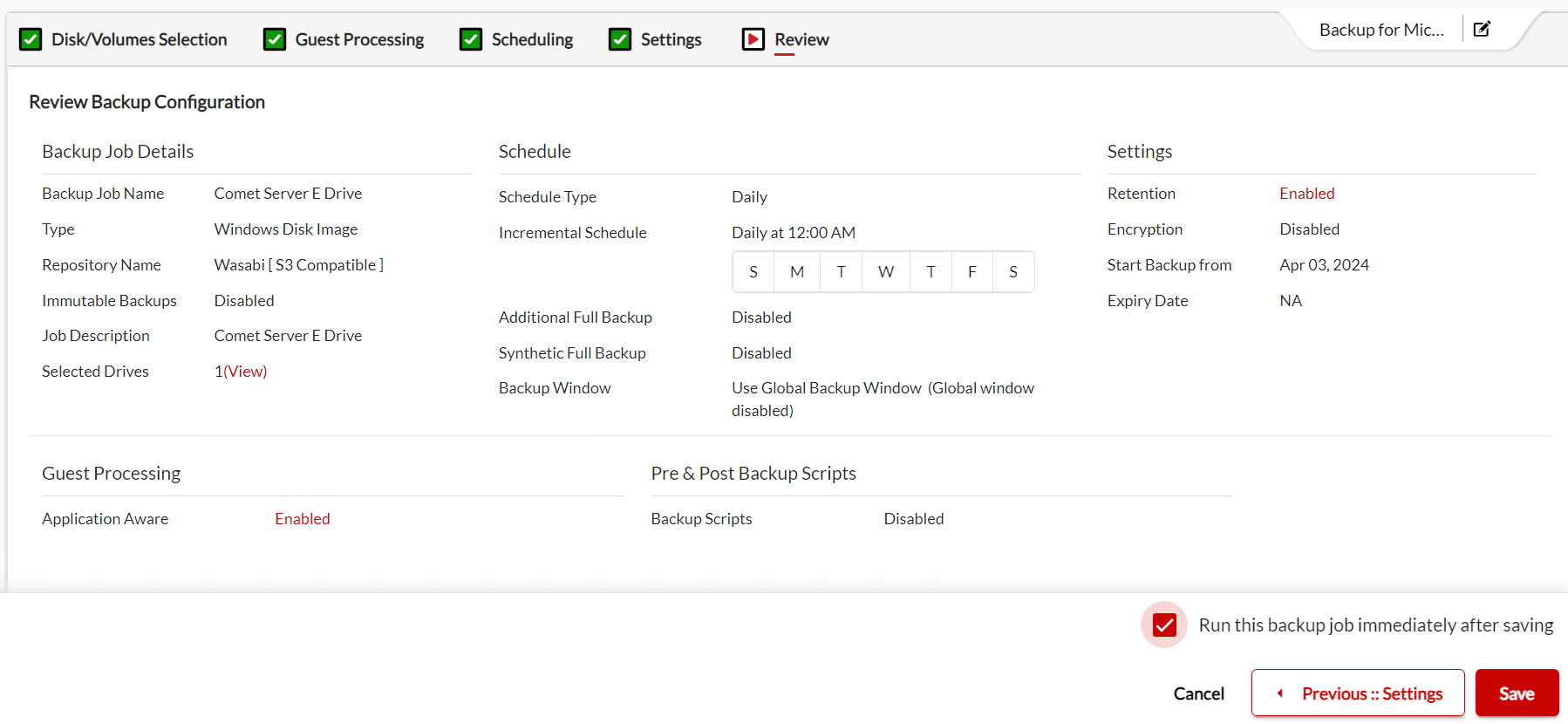
On the Review summary page, verify that the backup job settings are correct.
Check the box to run the job now, or leave it unchecked to follow the schedule you established.
Click Save.
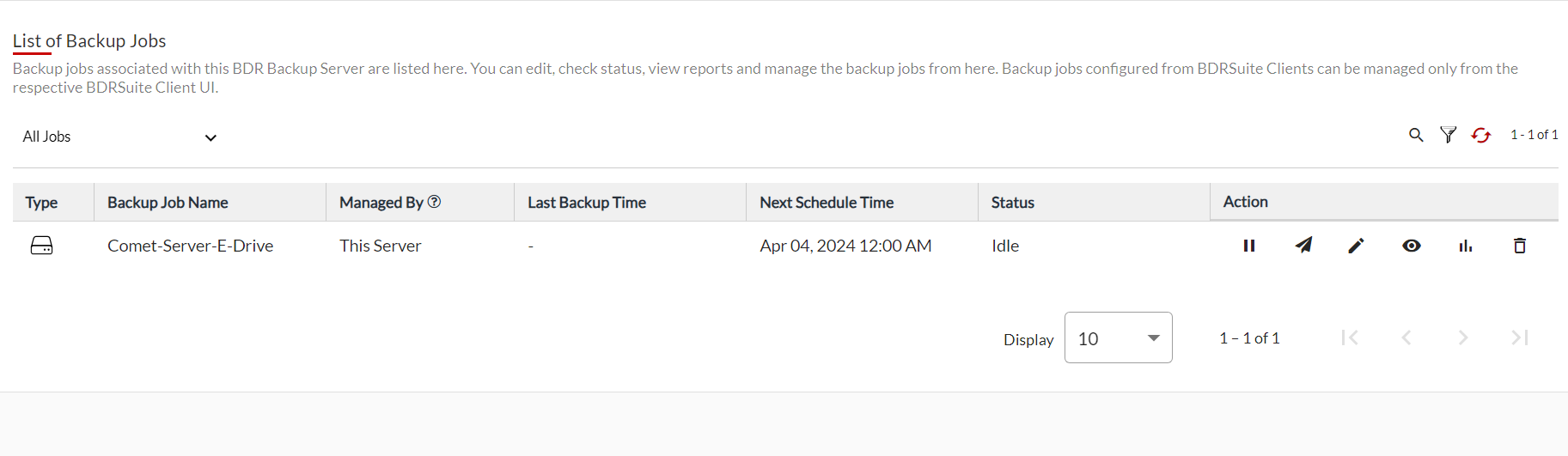
You will then see the backup job listed.
Configuring a Backup Copy Job
If the Primary Backup is stored in a local block storage repository, you can store your secondary copy in the added object storage repository, Wasabi.
Backup Copy is supported for VMware, Hyper-V, and Windows Disk-based backup jobs.
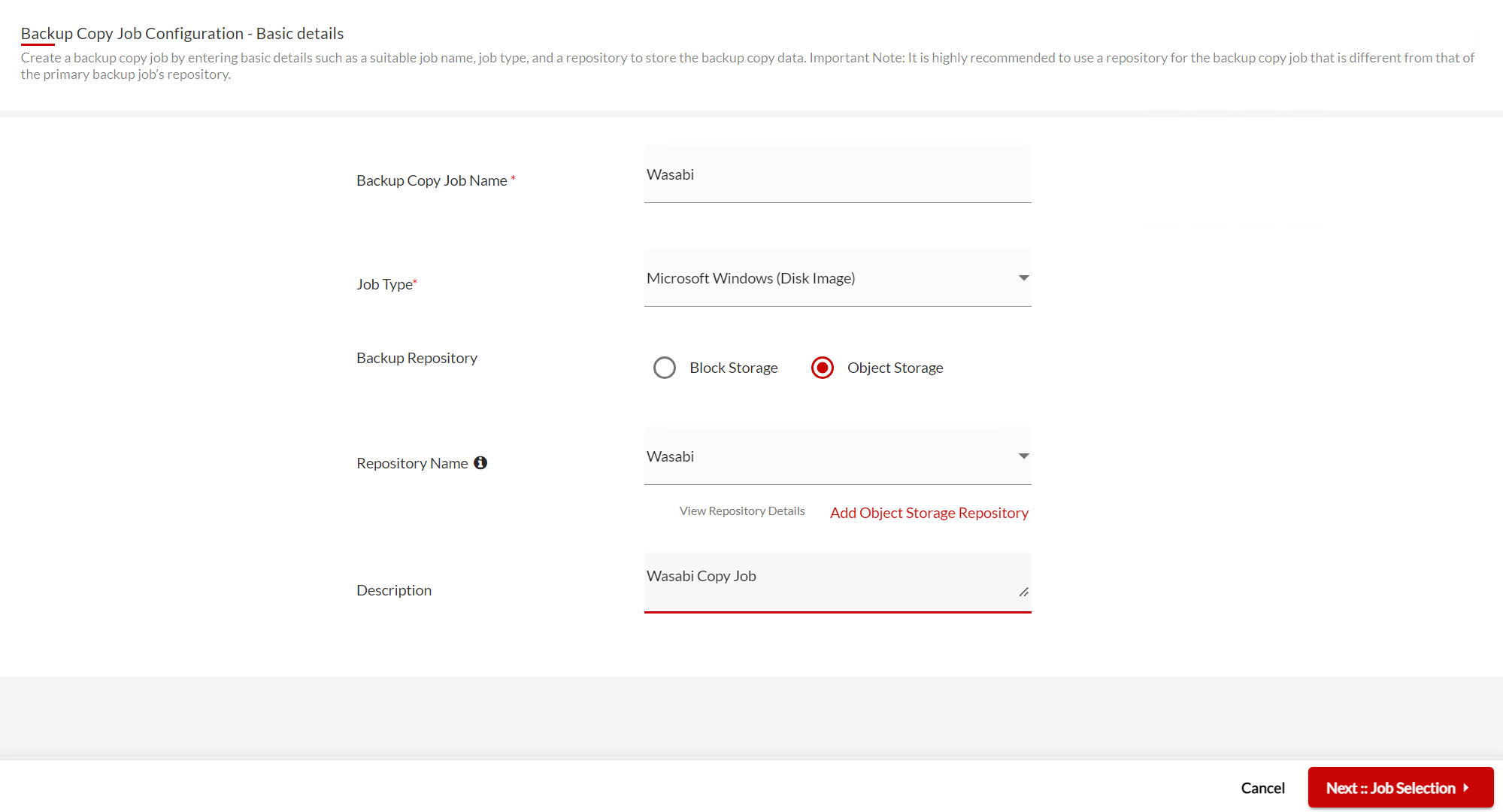
In the BDRSuite Backup Server console, navigate to the Backup Copy tab. Create New Backup Copy Job.
Enter the following information:
Backup Job Name—Give the backup job a unique name.
Job Type—Select from the drop-down list.
Backup Repository— Select Object Storage.
Repository Name— Select the Wasabi storage name from the drop-down list.
Immutable Backups —Check the box to make backups immutable, then specify the number of days to retain immutability.
Job Description—Provide a unique description for the job.
Click Next :: Job Selection.
Select the job in which to copy. Click Next:: Schedule.
Select and configure your backup copy schedule. Click Next:: Settings.
Configure any retention settings for the backup copy job. Click Next:: Encryption.
Configure any encryption settings for the job. Click Next:: Review.
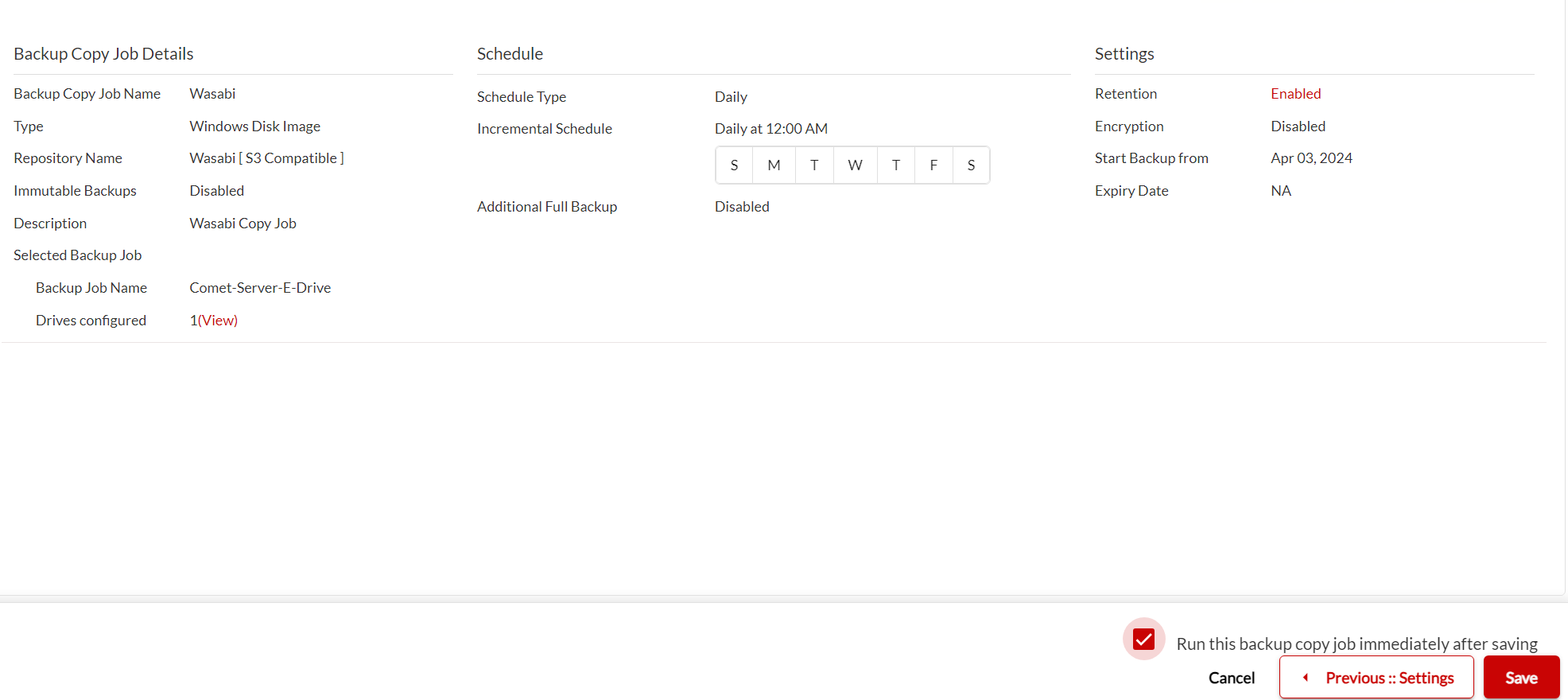
On the Review summary page, verify that the backup job settings are correct.
Check the box to run the job now, or leave it unchecked to follow the schedule you established.
Click Save.
Configuring Immutable Storage with Wasabi
Create a Wasabi Bucket with Object Lock enabled. For more information, refer to Object Lock: Enabling.
Remove Default Retention Settings (if any). While configuring Object Lock, ensure that no default retention settings are applied to the bucket, so objects are classified as immutable without predefined retention periods.
Starting on Step 5 of Adding Wasabi as an Object Storage Repository, select the Immutable Backups Option and specify the number of days you want the data locked for.
In Step 2 of Configuring a Backup Job, when you select the OL-enabled Wasabi Repository, the Immutable Checkbox will be preselected.
Additional Information
BDRSuite supports storing backup data for the following workloads to the Wasabi Cloud. Review the resources to learn more about the complete steps for configuring a backup job using the BDRSuite Backup Server.
SaaS Backup (Microsoft 365 and Google Workspace)
Virtual Machines (VMware, Hyper-V, KVM, oVirt, and Promax)
Server/Workstation (Windows, Linux, and Mac)
File Share (NAS and File Share)
Cloud (AWS and Azure)
Databases (MSSQL, PSQL, and MySQL) and Applications (MS Exchange and MS SharePoint).