Wasabi has been validated for use with HYCU, a leading multi-cloud backup as a service provider. This article describes the procedure to use Wasabi Object Replication to replicate objects from one region to another within the same continent. This can be used to recover from natural disasters or other events in a region.
The data restoration process is handled by your specific backup software application. As there are many potential variables that will affect your unique environment, Wasabi strongly recommends that you seek the guidance of your backup software's technical support team in the event that you encounter difficulty or have application-specific inquiries.
Requirements
Active Wasabi Hot Cloud Storage account.
Existing backups reside in a Wasabi Object Locked (immutable) or non-Object-Locked (non-immutable) source bucket.
HYCU licensed and deployed. This solution was tested with version v5.2.1. Wasabi recommends using the latest version.
Access to the Wasabi Console.
High-Level Steps
Follow the high-level steps below to implement Object Replication from a source bucket to a destination bucket in another region with HYCU. These are detailed further in the sections below.
Sign up for notifications to be sent to your account email address.
Create a Wasabi destination bucket to which the source bucket will be replicated.
Configure an object replication job on the source bucket pointing to the destination bucket.
In the case of a disaster, a recovery may be performed from the destination bucket.
Signing Up for Object Replication Notifications
Signing up for notifications enables you to receive information about any object replication failures.
Log in to the Wasabi Console (https://console.wasabisys.com/login).
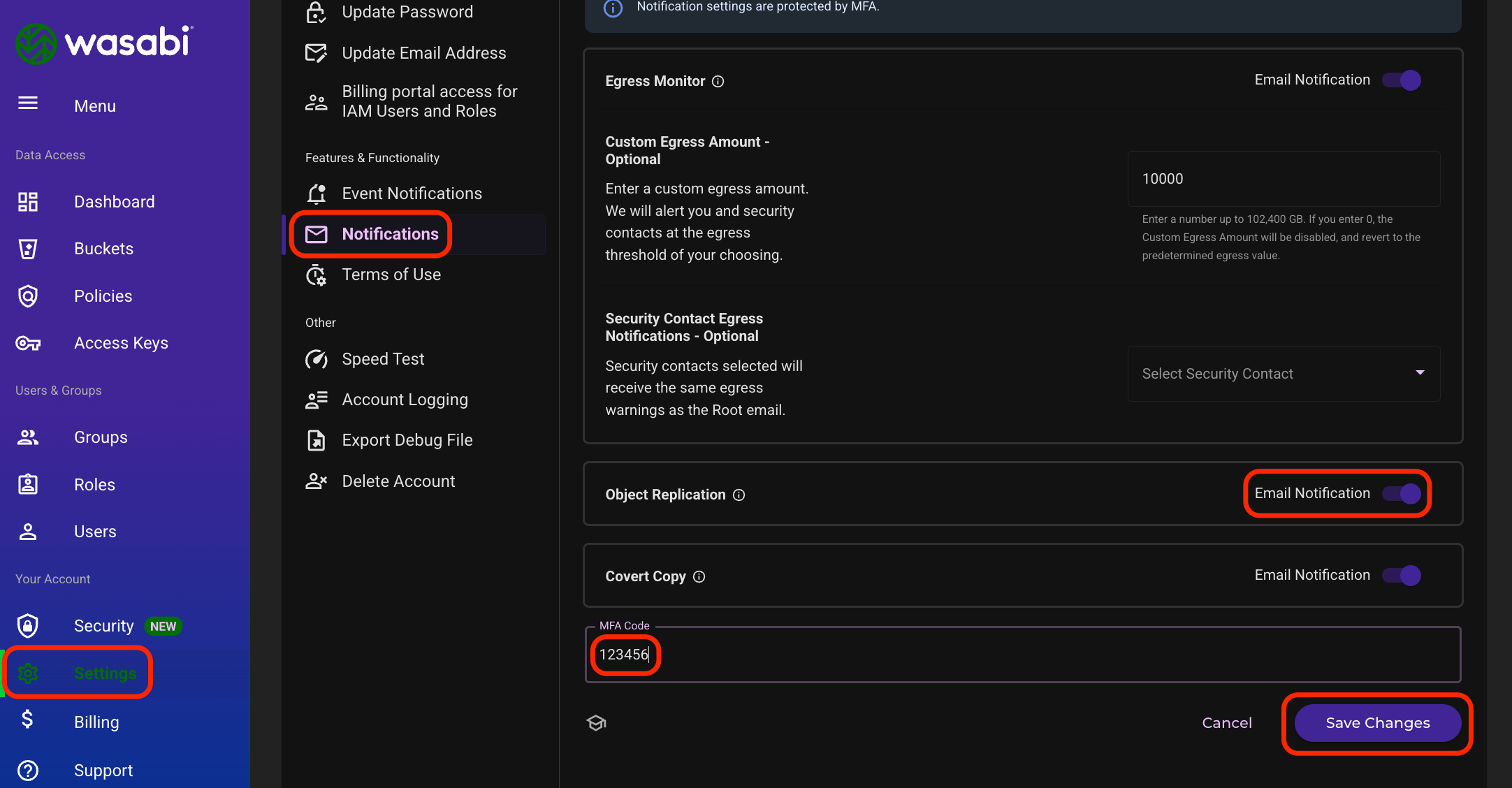
Navigate to Settings.
Click Notifications.
Next to Object Replication, enable Email Notification.
Enter your MFA code and click Save Changes.
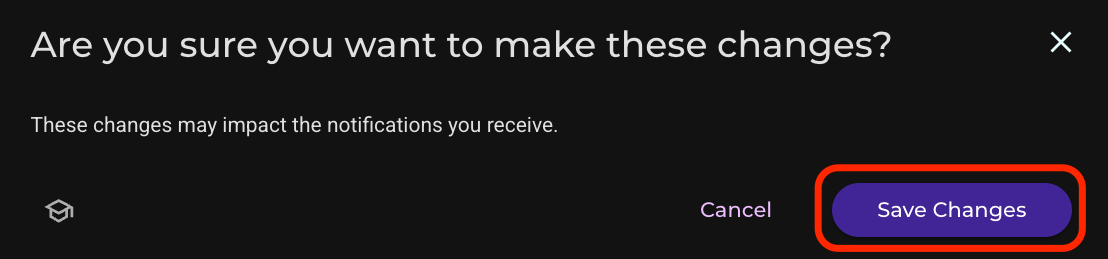
Click Save Changes.
Creating the Wasabi Destination Bucket
The destination bucket is the bucket that the source bucket will replicate to.
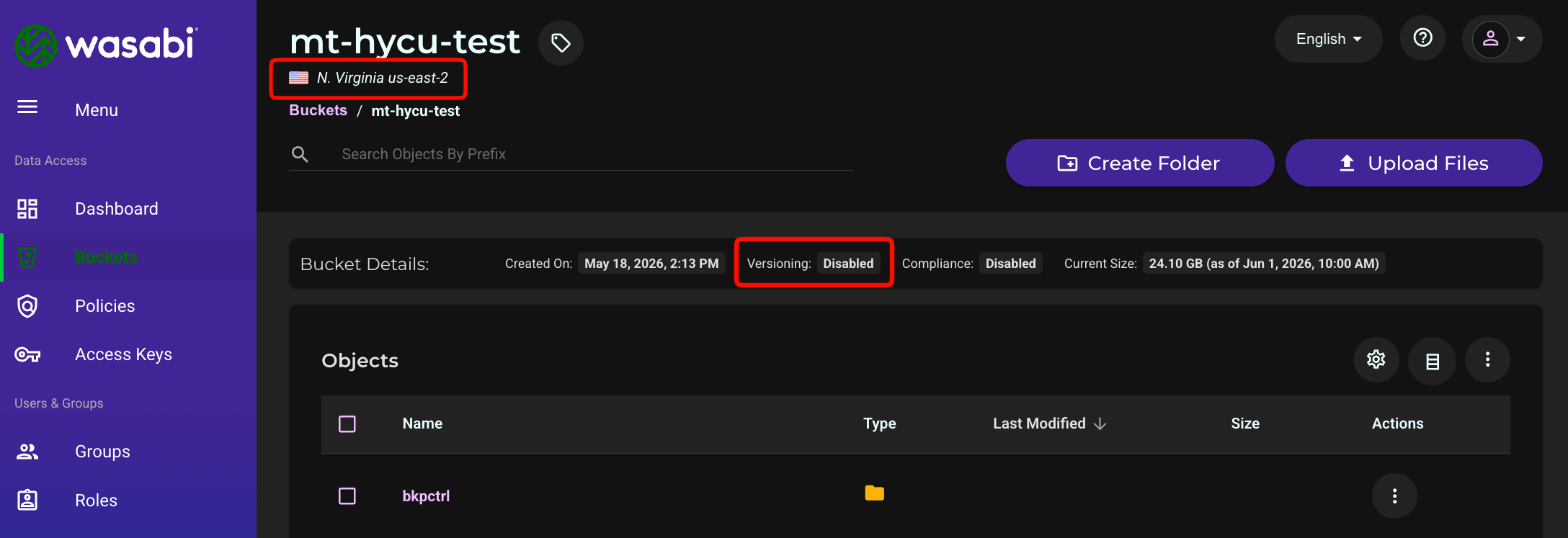
Navigate to Buckets and click the name of the source bucket.
.png)
Note the source bucket’s name, region, and Object Lock settings. In this example, we are using a source bucket in Wasabi’s us-east-2 region without Versioning or Object Lock enabled (Object Lock would appear if it were enabled).
Choose the region within the same continent for the destination bucket.
This configuration example discusses the use of Wasabi's us-east-2 storage region for the source and us-west-1 for the destination. For a list of regions, see Available Storage Regions.
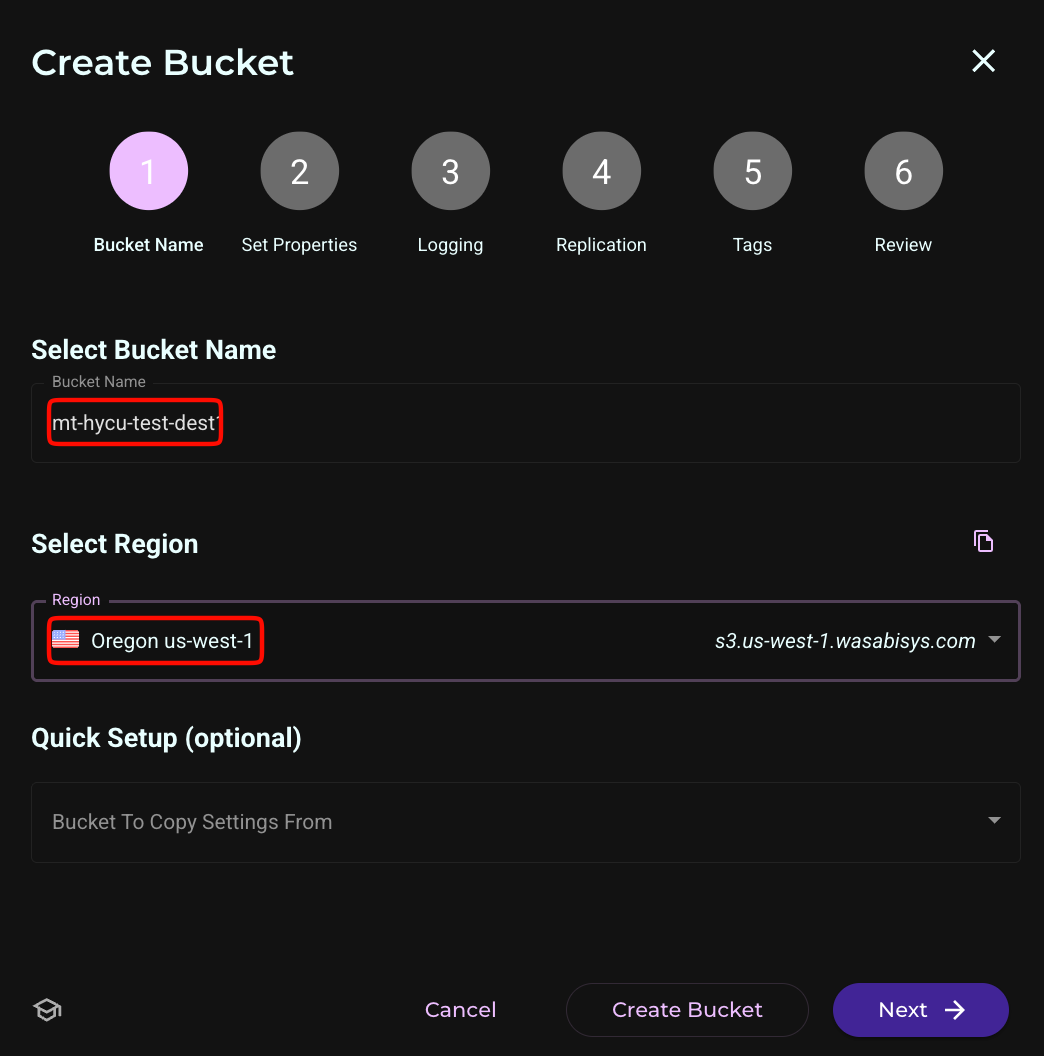
Navigate to Buckets. Click Create Bucket.
.png)
Enter the destination bucket name, select the region for the bucket. Click Create Bucket, or, click Next to enable Object Lock and other settings.
Leave Object Replication disabled (default). The replication will be configured later on the source bucket.
Creating an Object Replication Job
Navigate to Buckets and select the name of the source bucket.
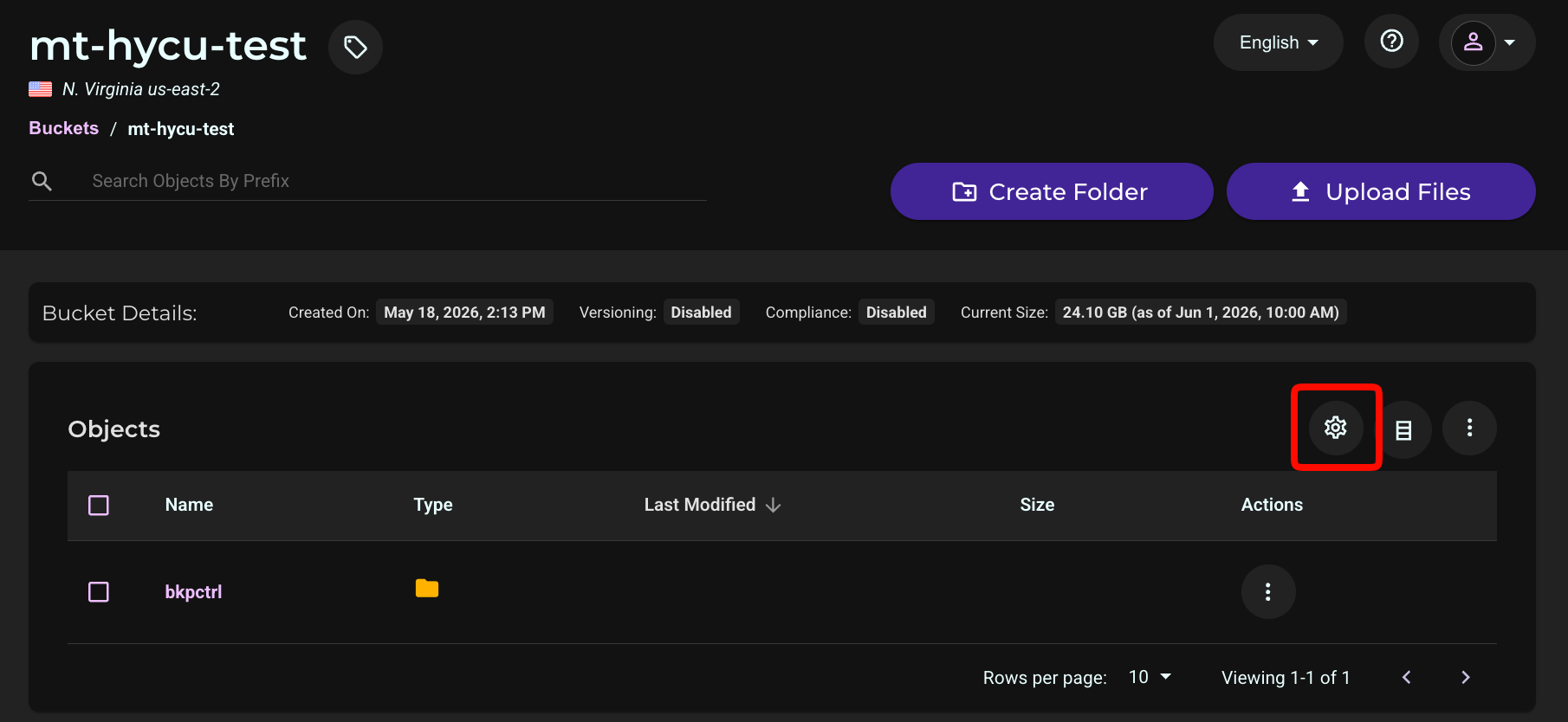
Click Settings (gear icon) on the right side of the screen.
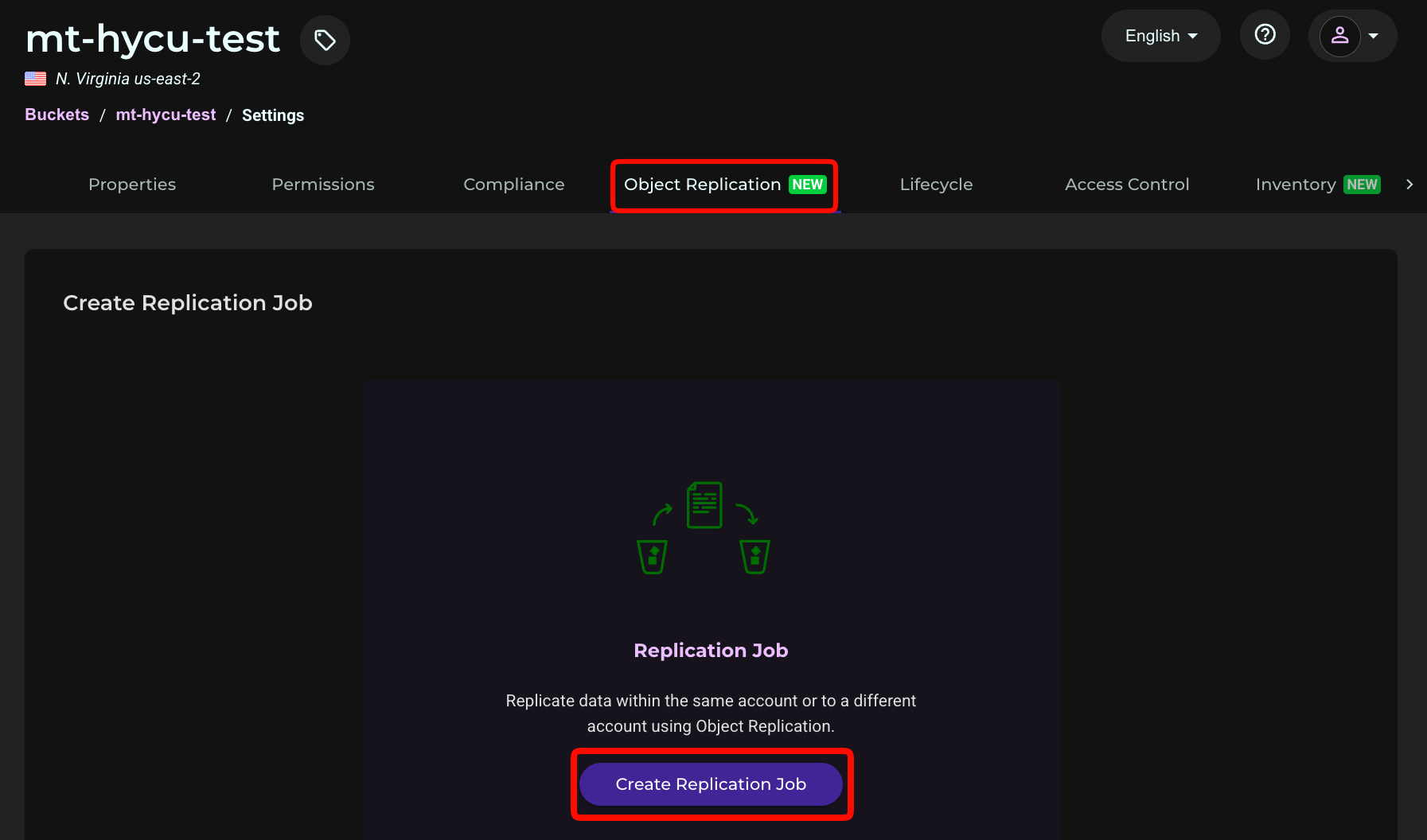
Click the Object Replication tab. Click Create Replication Job.
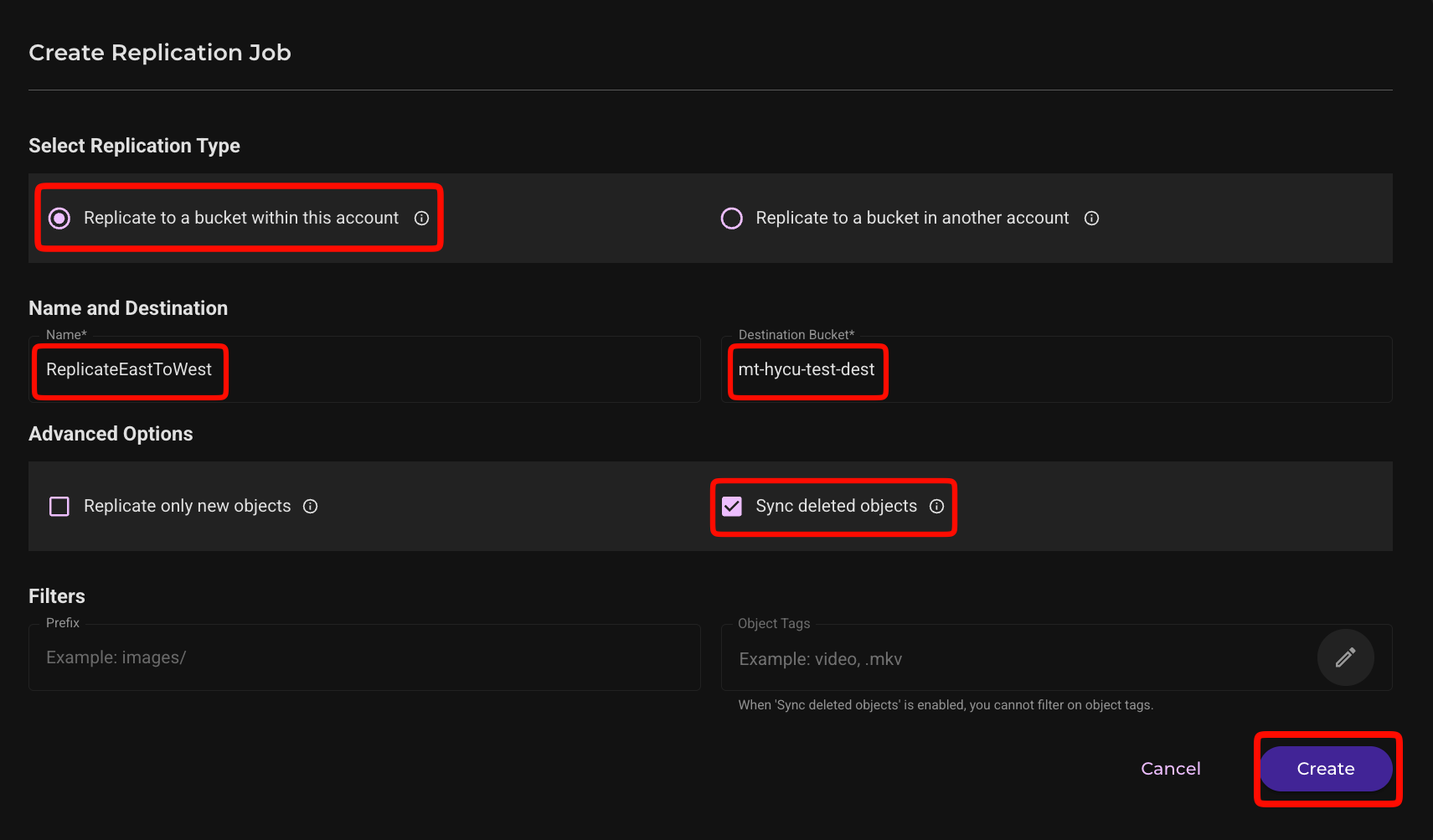
Select the Replication Type. For this example, we are selecting Replicate to a bucket within this account. Give the job a name, and click in the Destination Bucket text field to select the destination bucket. Click the checkbox next to Sync Deleted Objects. This allows HYCU to control the backup lifecycle of the source bucket, and older backups that HYCU deletes from the source bucket will also be deleted from the destination bucket. Click Create.
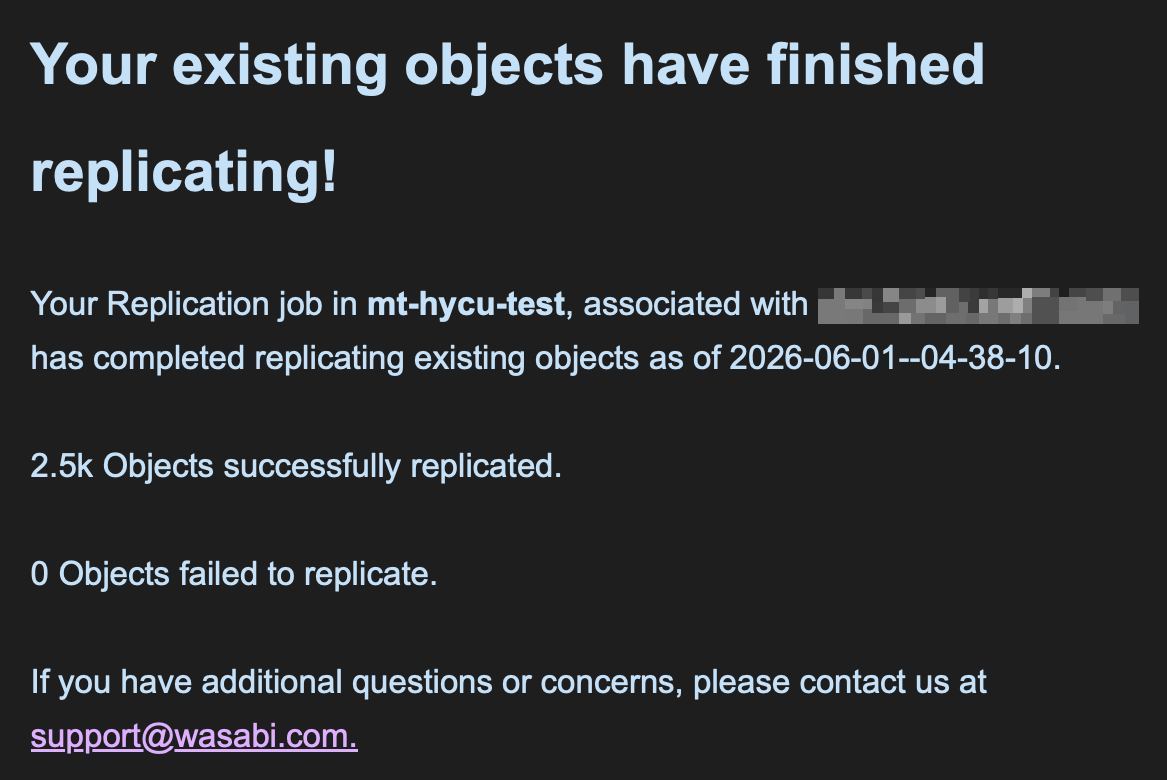
The objects in the source bucket will now begin to replicate to the destination. There is no ETA for completion as this depends on many factors, such as the number of objects, frequency of backups, and so on. You will receive an email saying the replication has begun, as well as an email when the existing objects have all been replicated as shown below.
Appendix A - In Case of a Disaster
If a disaster affects your source bucket, proceed with this section.
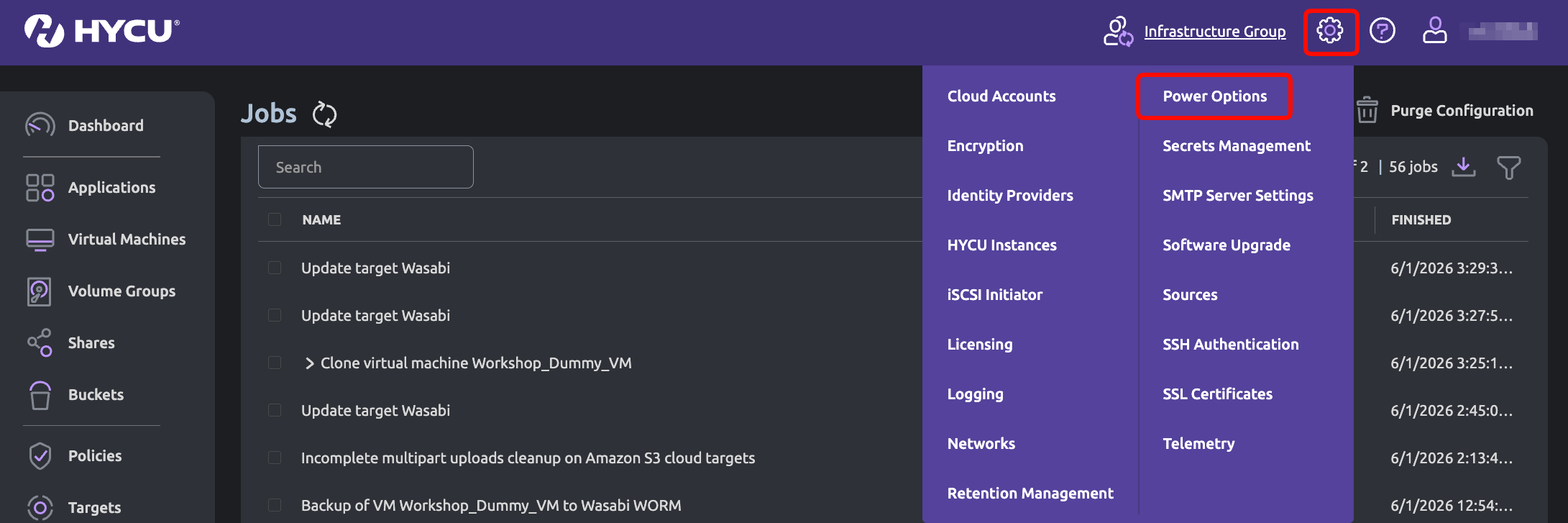
Log in to the HYCU console. Navigate to Settings (gear icon). Select Power Options.
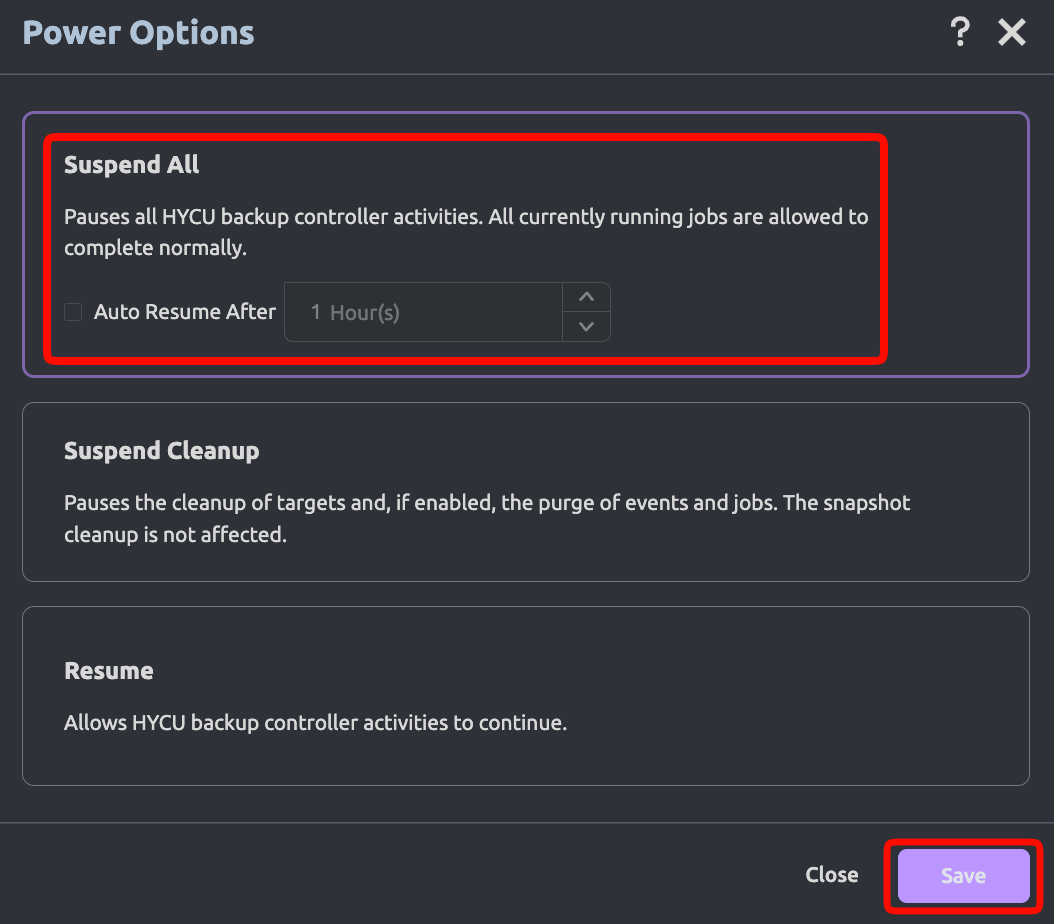
Click Suspend All. Do not select auto-resume. Click Save.
Log in to the Wasabi Console (https://console.wasabisys.com/login). Select Buckets, then select the source bucket name.
.png)
Click Settings (gear icon) on the right side of the screen.
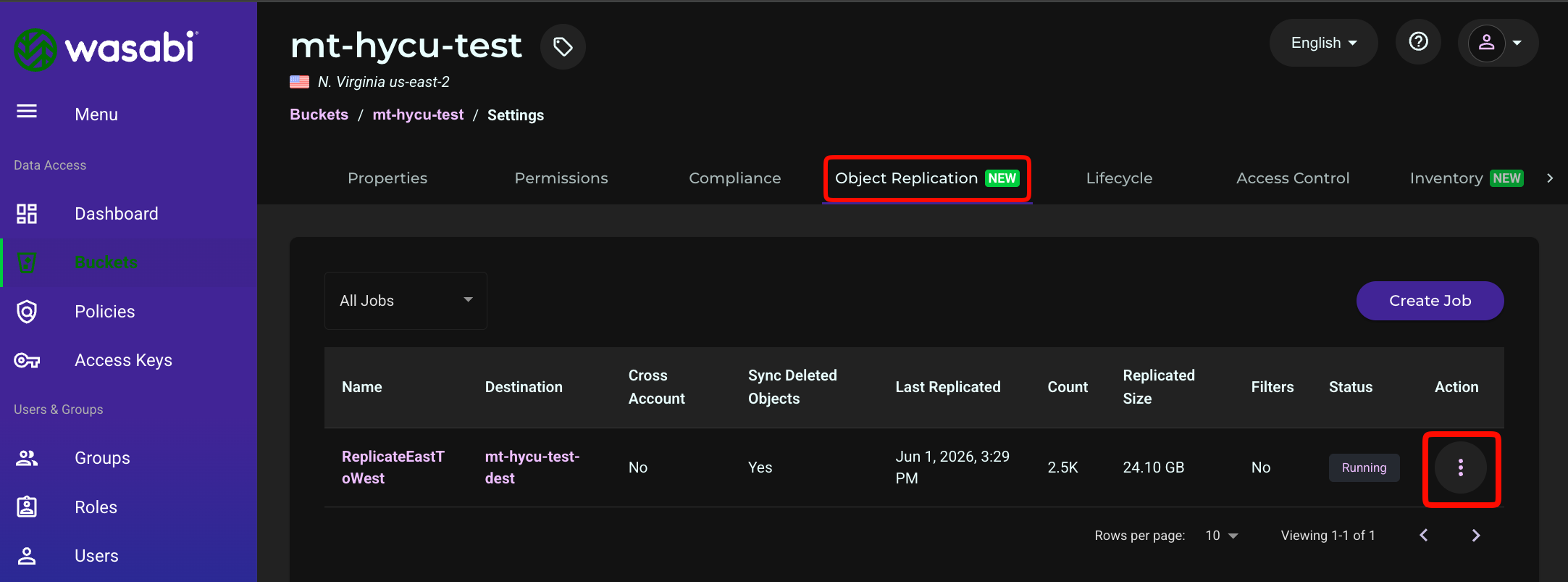
Click Object Replication. Click the 3 vertical dots under Action (next to your replication job).
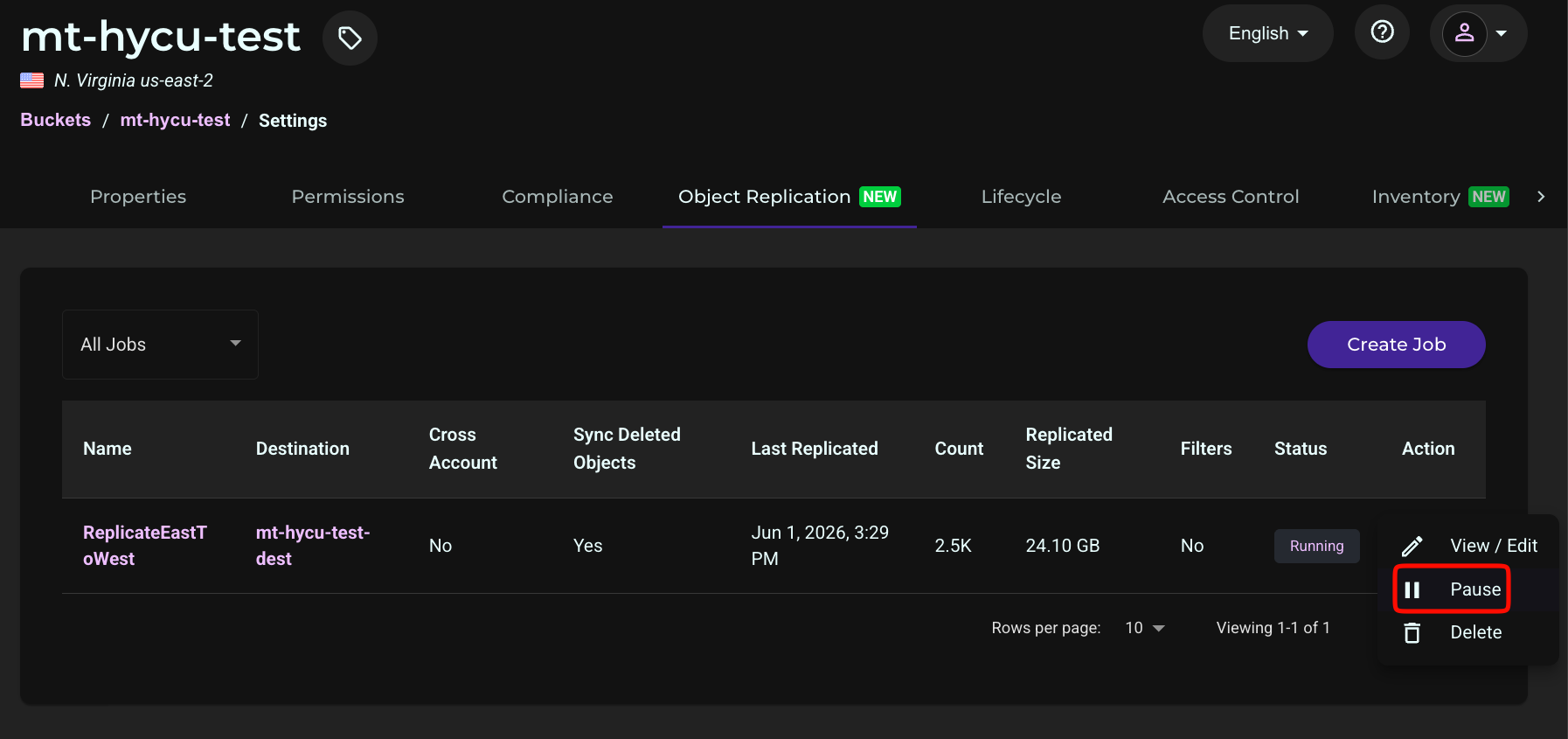
Click Pause.
Click Pause on the popup window.

Log in to the HYCU console. Select the Targets tab on the left.
Select your existing Wasabi target.
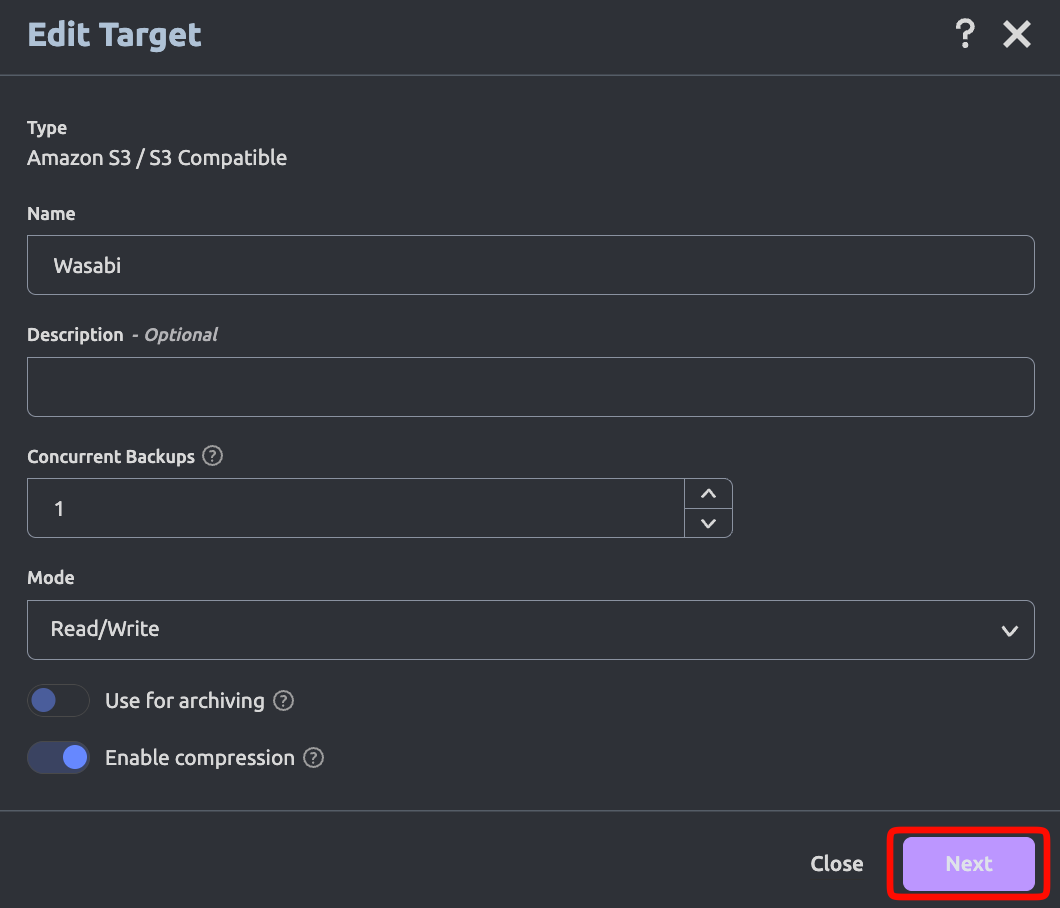
Click Edit.
.png)
Click Next.
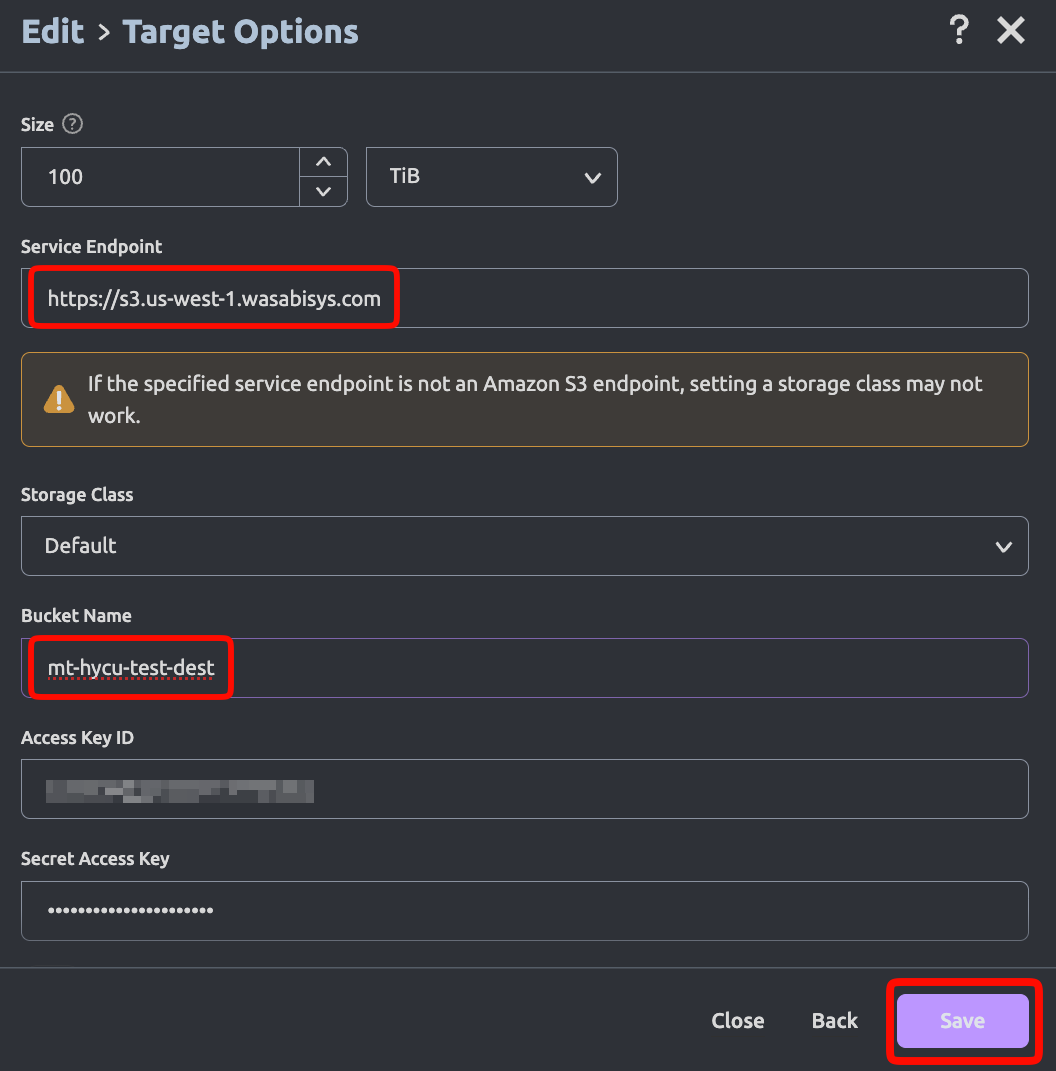
Change the service endpoint URL to the Wasabi URL that matches the region that your destination bucket is in. Change the bucket name to be your destination bucket name. Click Save.
This configuration example discusses the use of Wasabi's us-west-1 storage region. To use another Wasabi storage region, use the appropriate URL as shown in Service URLs for Wasabi's Storage Regions. Use the URL for the region your destination bucket is located in.
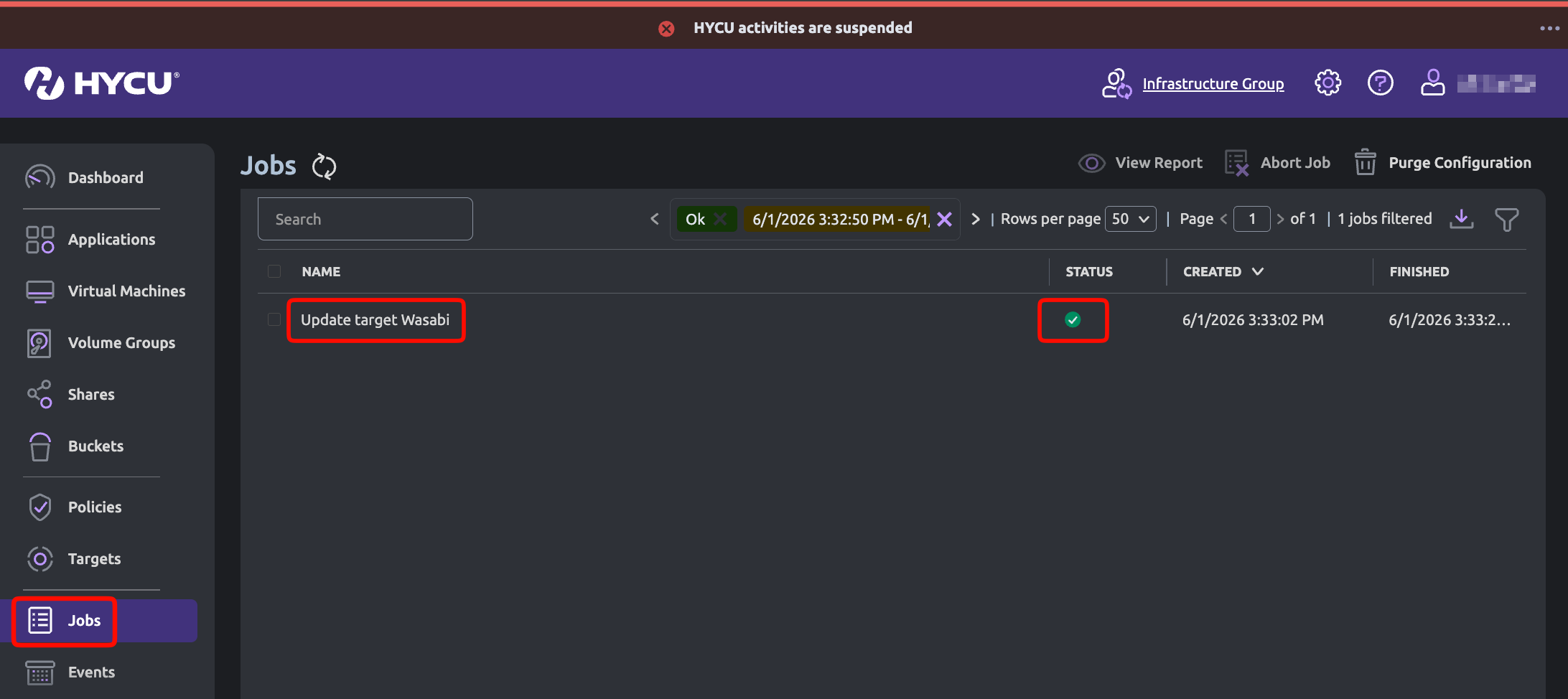
Click Jobs and verify that the “Update target job for your Wasabi target” step was successful.
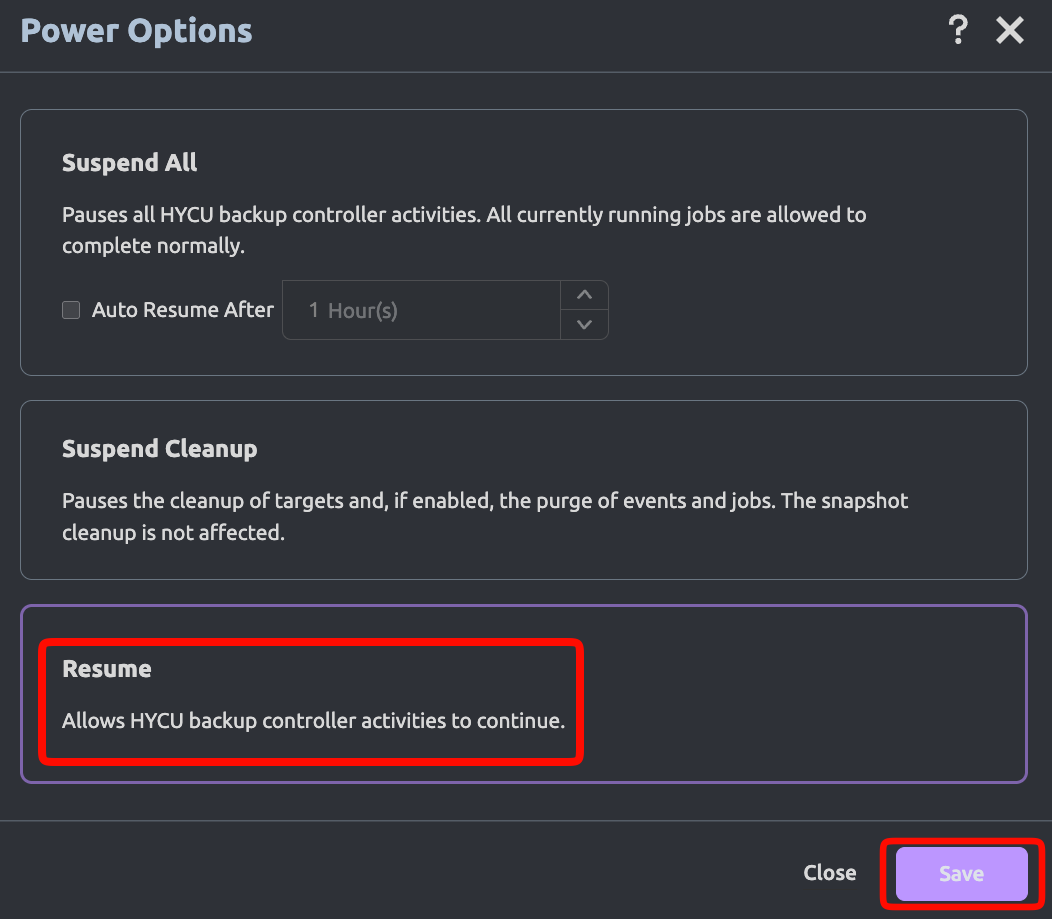
Navigate to Settings (gear icon).
Select Power Options.
Click Resume.
Click Save.
In this example, we will perform a test restore validation for a Virtual Machine (VM). Go to Virtual Machines and select the VM to restore.
In the lower portion of the screen, select a restore point.
Click Restore.
.png)
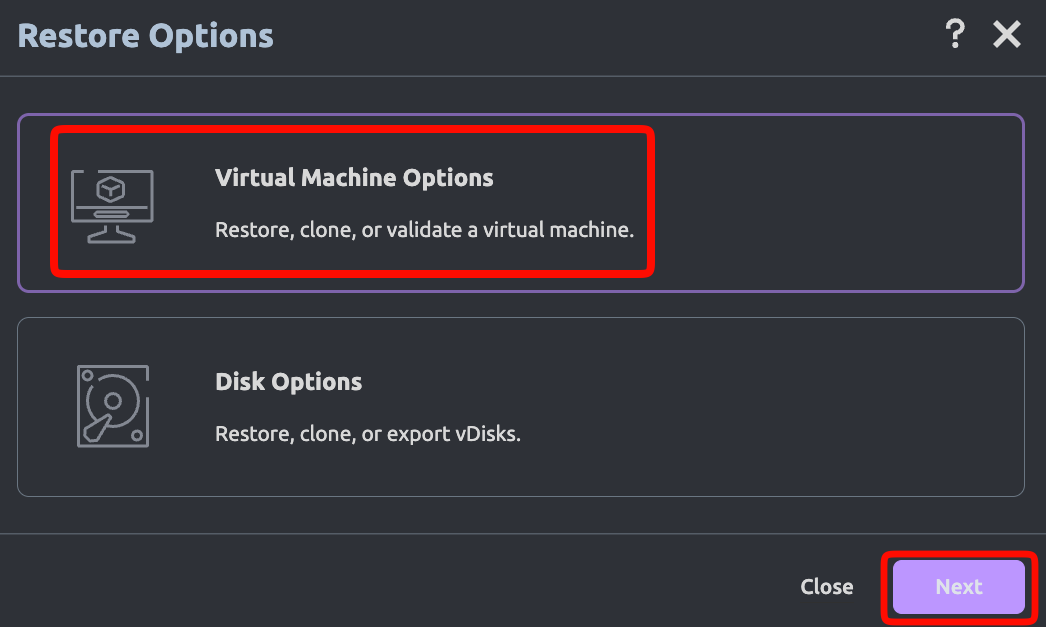
Select Virtual Machine Options.
Click Next.
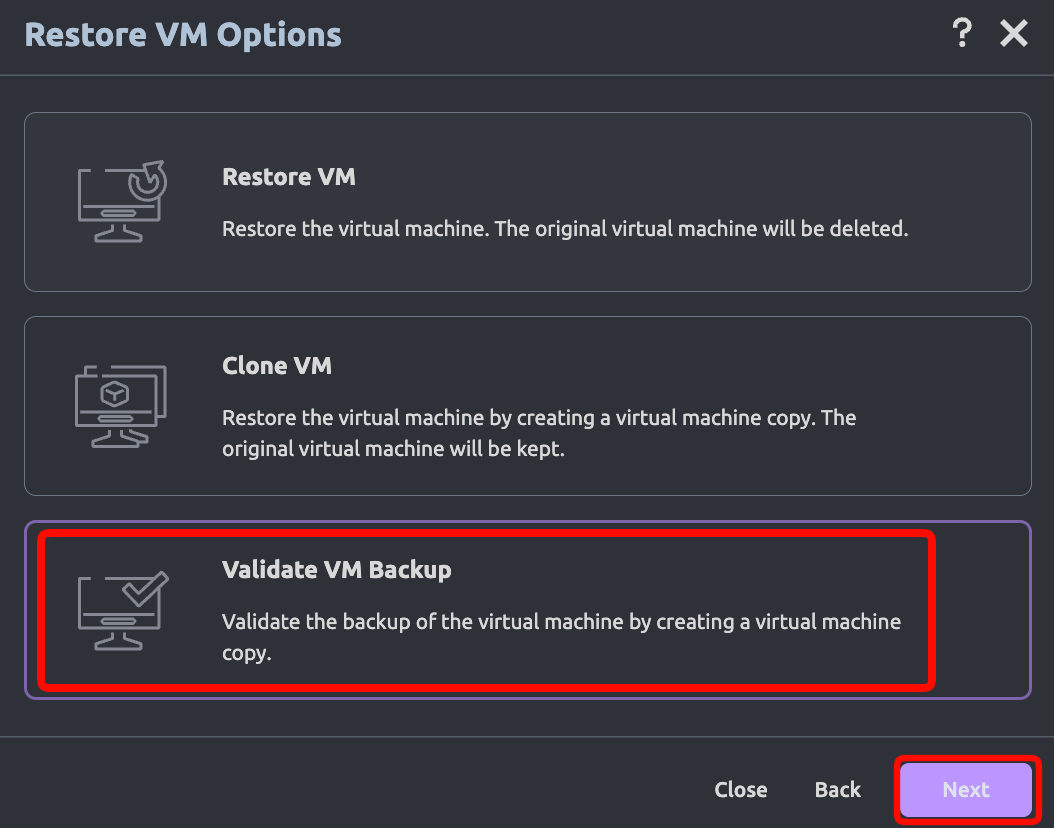
Select the Validate VM Backup.
Click Next.
Select either Restore VM or Clone VM instead of Validate VM Backup (if you need to restore the VM).
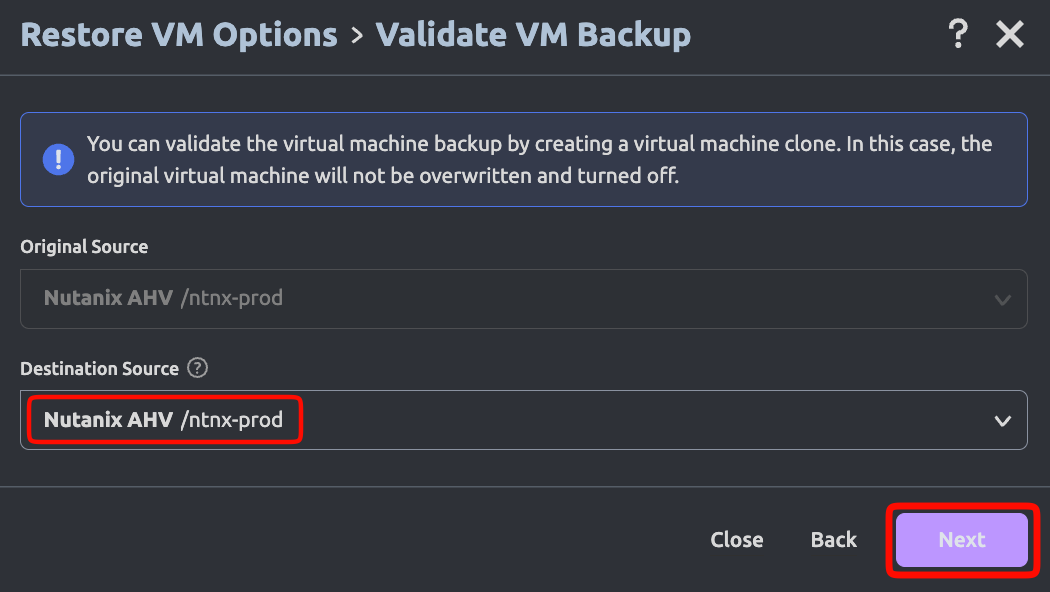
Select the Destination Source. Click Next.
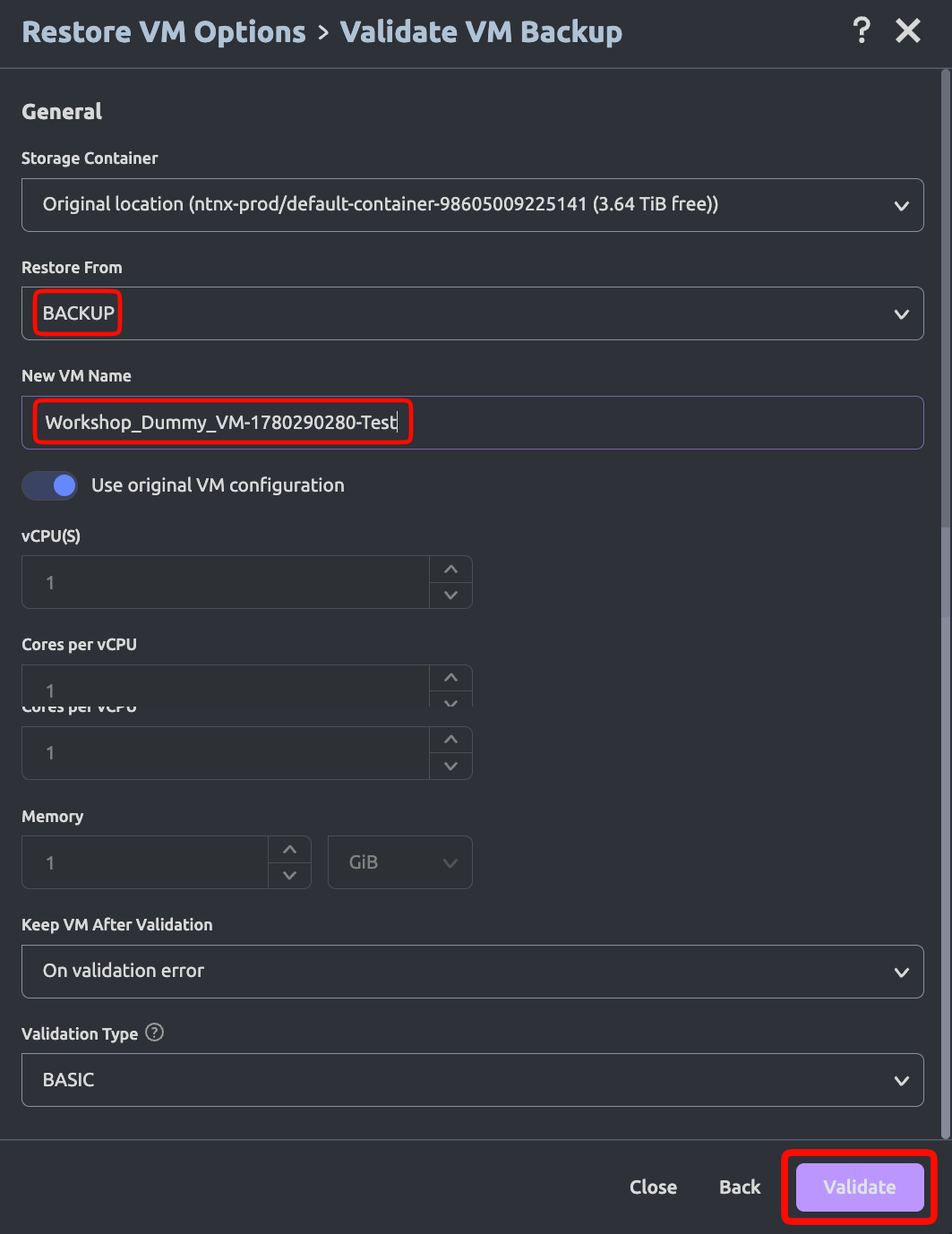
Select the appropriate Storage Container for your environment and select BACKUP in the Restore From field.
Give the test VM a name.
Click Validate.
Go to the Jobs tab. You should see a green checkmark in the status column for the backup validation job after the validation is complete.
.png)